
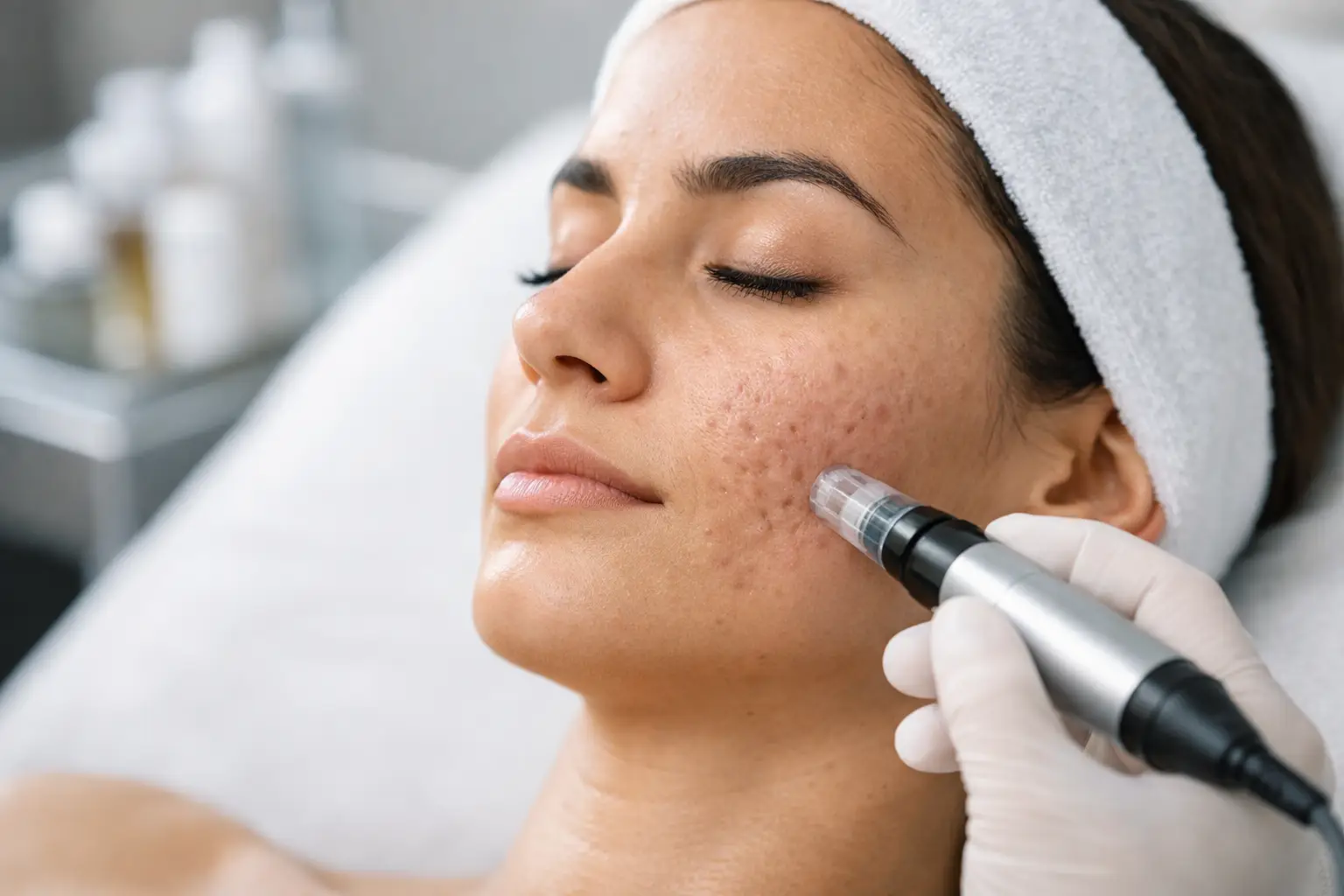
Acne may fade, yet the texture it leaves behind can remain a daily frustration – especially under makeup, bright office lighting, or close-up photographs. Microneedling for acne scars is a science-backed treatment designed to improve the look of depressed scarring by encouraging the skin’s own renewal process. For the right candidate, it can create meaningful, natural-looking refinement without changing the character of the face.
At The Skin Health Clinic, we view scar revision as more than a single procedure. Your skin’s history, current inflammation, pigment concerns, lifestyle, and recovery capacity all influence the treatment plan. That level of personalization matters because acne scars are not all the same, and neither are the results people hope to achieve.
How Microneedling Helps Acne Scars
Microneedling uses a medical-grade device with very fine, sterile needles to create controlled microchannels in the skin. These precise channels trigger a wound-healing response, signaling the production of collagen and elastin – two structural proteins that support smoother, firmer-looking skin.
This is particularly relevant for atrophic acne scars, which sit below the surrounding skin surface. As collagen remodeling develops over time, the edges and depth of certain scars may become less noticeable. The goal is not to erase every mark or create artificial perfection. It is to improve texture, soften visible irregularities, and help skin reflect light more evenly.
Results build gradually. The initial post-treatment glow can be encouraging, but collagen renewal is a longer process. Most clients begin to notice changes in texture over several weeks, with continued improvement after a carefully spaced series of treatments.
Which Acne Scars Respond Best?
Microneedling tends to be most helpful for rolling scars and some shallow boxcar scars. Rolling scars create a wave-like texture across the skin, while boxcar scars have more defined, broad depressions. By supporting collagen production, microneedling can help soften the contrast between scarred and unaffected skin.
Deep ice-pick scars often need a different or combined approach. Because these scars are narrow and extend deeper into the skin, they may respond better to targeted scar techniques, resurfacing procedures, or other physician-guided options. Raised scars also require special consideration, as stimulating the area may not be appropriate for everyone.
Skin tone is another reason to seek professional assessment. People prone to post-inflammatory hyperpigmentation need treatment settings, preparation, and aftercare chosen with care. A licensed provider can determine whether microneedling is suitable and how to protect the skin’s barrier throughout the process.
Active Acne Comes First
Microneedling is generally not performed over active, inflamed acne. Treating skin with active breakouts may worsen irritation or spread acne-causing bacteria across the treatment area. The first step may be calming inflammation, reviewing your skincare routine, and identifying contributing factors such as hormonal changes, stress, medications, or product congestion.
For many clients, this is where an integrated approach is especially valuable. Clinical skincare can support acne management from the outside, while nutrition-guided vitamin protocols and whole-body wellness support may help create a stronger foundation for lasting skin health. These strategies are never a replacement for medical acne care when it is needed, but they can be thoughtful additions to a personalized plan.
What a Professional Treatment Feels Like
A premium microneedling experience begins before the device touches your skin. Your provider evaluates the type and location of scarring, assesses active inflammation and pigment risk, and discusses realistic outcomes. This consultation also identifies factors that can affect healing, including certain medications, recent sun exposure, skin infections, and a history of abnormal scarring.
On treatment day, the skin is cleansed and a topical numbing cream is typically applied for comfort. Once the area is prepared, the provider guides the microneedling device across the skin using settings selected for your concerns and treatment zone. Depth is not a one-size-fits-all decision. Delicate areas and deeper scars may require distinctly different techniques.
The procedure itself commonly takes 30 to 60 minutes, depending on the areas treated and whether your plan includes complementary rejuvenation therapies such as platelet-rich plasma, or PRP. PRP may be used alongside microneedling for appropriate candidates because it contains growth factors that support the skin’s natural repair response. Whether it is right for you depends on your goals, budget, skin condition, and provider’s clinical recommendation.
Afterward, skin often looks pink to red, similar to a moderate sunburn, and may feel warm or tight. This usually settles over the next one to three days, although deeper treatments can produce longer redness. Mild dryness, flaking, and temporary sensitivity are also common during recovery.
The Recovery That Protects Your Results
Aftercare is not an afterthought. The microchannels created during treatment are temporary, and the skin is more vulnerable while its barrier recovers. Your provider will recommend products suited to your skin, but the essentials are gentle cleansing, generous hydration, and daily broad-spectrum sunscreen.
For the first several days, avoid exfoliating acids, retinoids, scrubs, and other potentially irritating actives unless your provider directs otherwise. Skip intense heat, saunas, heavy sweating, and swimming while the skin is sensitive. Makeup may need to wait briefly as well, depending on the intensity of your treatment and your provider’s guidance.
Sun protection deserves particular attention. Ultraviolet exposure can intensify redness and increase the risk of uneven pigmentation, especially after any collagen-stimulating procedure. Consistent sunscreen is one of the simplest ways to protect both your investment and your long-term skin quality.
How Many Sessions Will You Need?
A single session can refresh the appearance of skin, but acne scar improvement usually calls for a series. Many people benefit from three to six treatments, commonly spaced about four to six weeks apart. Deeper or more extensive scarring may require additional sessions or a combined plan.
The right number is influenced by scar type, severity, skin tone, healing response, and the degree of improvement you want to pursue. It is better to approach treatment thoughtfully than to chase aggressive settings or unrealistic timelines. Collagen takes time to remodel, and healthy skin responds best to measured, professionally guided care.
Before-and-after photographs can be useful during your consultation, provided they represent similar scar types, skin tones, and treatment plans. Even then, they should be viewed as examples rather than promises. Your skin’s response is individual.
Safety, Risks, and When to Wait
When performed by trained, licensed professionals using sterile technique and appropriate settings, microneedling is widely regarded as a well-tolerated procedure. Still, every aesthetic treatment has potential risks. These can include prolonged redness, swelling, bruising, acne flare-ups, infection, pigmentation changes, and, rarely, scarring.
You may need to postpone treatment if you have active acne lesions, a current skin infection, a sunburn, an active cold sore near the treatment area, or certain medical conditions. Tell your provider about prescription medications, blood-thinning supplements, isotretinoin use, allergies, pregnancy, and any previous healing concerns. Honest medical history helps your provider make decisions that put safety before speed.
At-home rollers and pens can be tempting, but they do not offer the same sterile environment, precision, or professional oversight. Improper device use can irritate the skin, introduce bacteria, and create more inflammation – the opposite of what scarred skin needs.
Is Microneedling the Right Next Step?
Microneedling can be an excellent option when acne is controlled and the main concern is lingering texture, shallow depressions, or uneven-looking skin. It is not a quick fix, and it is not the best standalone answer for every scar pattern. That is precisely why a consultation matters.
A customized plan may include medical-grade home care, microneedling, PRP, targeted scar treatments, or other rejuvenation options selected around your skin’s needs and your schedule. The most refined results come from pairing clinical precision with consistent recovery habits, sun protection, and support for overall wellness.
Your acne scars are part of your skin’s story, not a measure of your confidence. With experienced guidance and a treatment plan built for your individual skin, smoother-looking texture and renewed confidence can be realistic goals worth pursuing.