
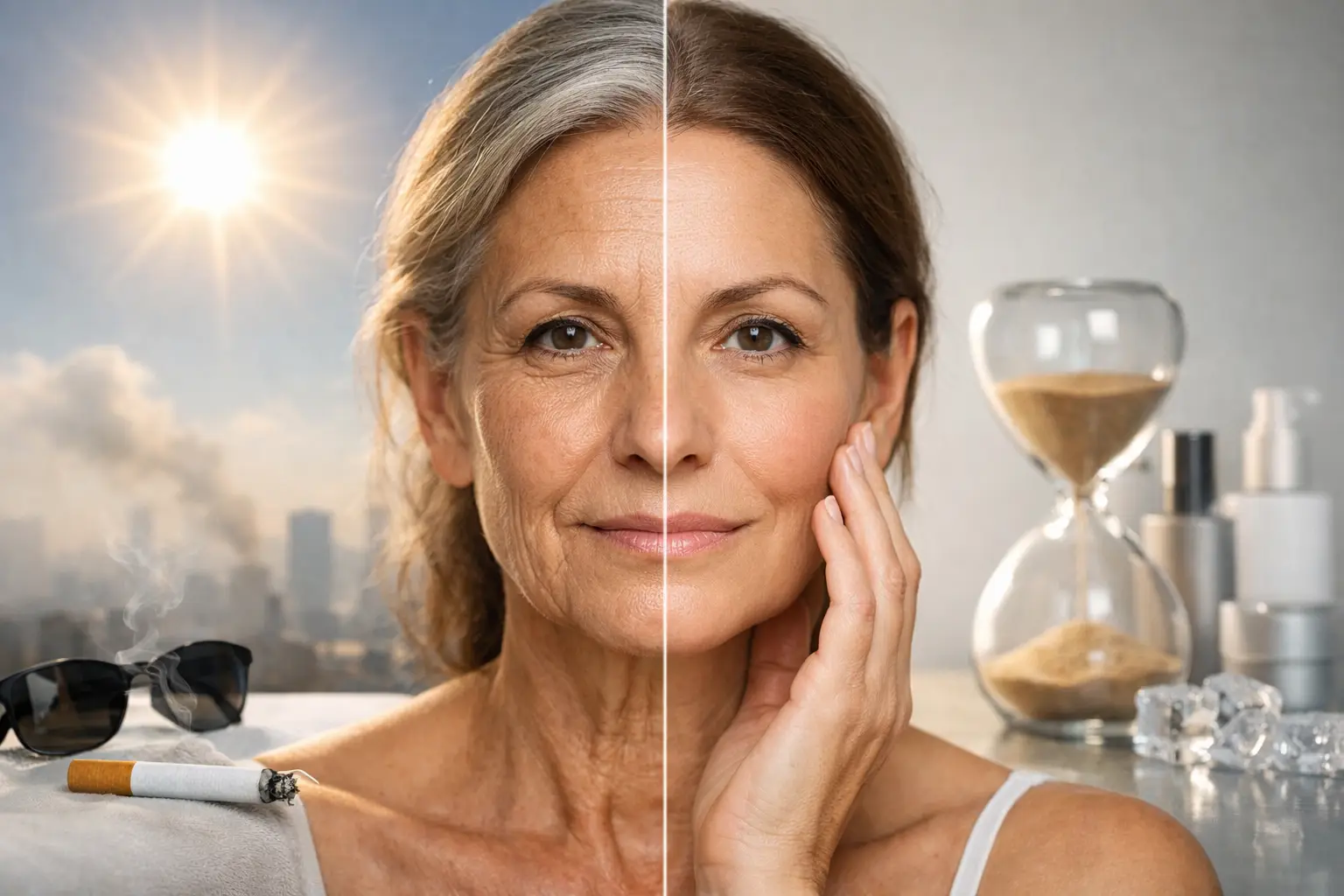
A new fine line at 32, makeup settling into texture that was never there before, or skin that suddenly looks dull despite a faithful routine can feel frustrating. The question of what causes premature skin aging rarely has one simple answer. Skin changes are often the visible result of cumulative exposure, biological shifts, lifestyle patterns, and the quality of care it receives over time.
Chronological aging is natural. Premature aging is different: it refers to changes that appear earlier or progress more noticeably than expected because collagen, elastin, hydration, and barrier function are being affected by factors beyond the passage of time. The encouraging part is that many of these influences can be identified and meaningfully addressed with consistent protection, professional guidance, and a plan tailored to your skin.
What Causes Premature Skin Aging?
Skin is remarkably resilient, but it is not indifferent to its environment. Repeated inflammation, oxidative stress, dehydration, and collagen breakdown can gradually change its texture, tone, firmness, and clarity. Genetics influence how skin ages, but daily choices and exposures often determine how quickly those inherited tendencies become visible.
Sun exposure and ultraviolet damage
Ultraviolet exposure is one of the strongest drivers of premature skin aging. UVA rays penetrate deeply into the skin, where they contribute to collagen and elastin damage. UVB rays are more closely associated with sunburn, but both can trigger inflammation and pigment changes. This is why sun damage may show up as fine lines, laxity, uneven tone, visible capillaries, rough texture, or brown spots years after the exposure occurred.
It is not only long days at the beach that matter. Driving, outdoor workouts, lunch on a patio, and even brief unprotected daily exposure add up. Broad-spectrum sunscreen is one of the most effective long-term investments in skin health, especially when paired with hats, sunglasses, shade, and thoughtful reapplication. The right formula should feel comfortable enough to wear every day, because consistency matters more than a product that remains unused on the shelf.
Smoking, pollution, and oxidative stress
Smoking accelerates visible aging by constricting blood vessels and reducing the delivery of oxygen and nutrients to the skin. It also promotes the breakdown of collagen and elastin, contributing to deeper lines, a duller complexion, and slower healing. Repetitive facial movements associated with smoking can further emphasize lines around the mouth.
Environmental pollution can have a quieter but still meaningful effect. Airborne particles and free radicals may contribute to oxidative stress, inflammation, discoloration, and a compromised skin barrier. Antioxidant-rich skincare, gentle but thorough cleansing, and daily sun protection can help support the skin against these external stressors. For clients in urban environments or those who spend substantial time outdoors, professional skin analysis can reveal concerns that are not yet obvious in the mirror.
Chronic stress and poor-quality sleep
Stress does not create wrinkles overnight, but chronic stress can influence the systems that keep skin balanced. Elevated cortisol may increase inflammation, impair barrier function, worsen acne or rosacea tendencies, and interfere with repair. When stress is paired with short or disrupted sleep, skin has less opportunity to recover from daily environmental strain.
A few late nights will not undo a healthy complexion. The concern is the ongoing pattern: demanding work schedules, frequent travel, irregular meals, and sleep that never feels restorative. Supporting skin health may mean refining your skincare routine, but it can also mean addressing recovery habits. Hydration, movement, stress-management practices, and a realistic sleep schedule all contribute to a more resilient complexion.
Nutrition, hydration, and internal support
Skin relies on adequate protein, essential fatty acids, vitamins, minerals, and water to maintain its structure and function. Highly processed diets, excessive alcohol intake, and large swings in blood sugar can contribute to inflammation and glycation. Glycation occurs when excess sugar binds to proteins such as collagen, making them less flexible and more prone to breakdown over time.
There is no single food or supplement that can erase aging, and restrictive wellness trends can create more harm than benefit. Still, nutrition is not separate from aesthetics. A personalized approach that considers hydration, protein intake, nutrient status, digestive health, and lifestyle can support the skin from within. For some individuals, clinician-guided vitamin protocols or wellness therapies may complement a topical regimen and in-office rejuvenation plan.
Hormonal changes and shifts in facial volume
Hormonal changes can alter the skin in ways that feel sudden. Estrogen supports collagen production, hydration, and elasticity, so perimenopause and menopause may be accompanied by dryness, thinning skin, changes in texture, and more noticeable laxity. Thyroid conditions, postpartum changes, and other hormonal fluctuations may also affect the complexion.
At the same time, the face naturally loses and redistributes volume with age. Shadows beneath the eyes, flatter cheeks, and folds around the mouth are not always caused by “more wrinkles.” They can reflect changes in the deeper facial structure. This distinction matters because the most natural-looking treatment plan addresses the source of the concern rather than chasing every line with a single solution.
Overly aggressive skincare and inconsistent routines
More products do not automatically produce better skin. Over-exfoliating, layering multiple strong active ingredients, using harsh cleansers, or changing routines every week can weaken the skin barrier. A compromised barrier may lead to stinging, redness, flaking, breakouts, and a persistently dehydrated appearance that can make lines look more pronounced.
Active ingredients such as retinoids, exfoliating acids, vitamin C, and peptides can be valuable, but their use should reflect your skin type, sensitivity, goals, and season. Acne-prone skin, melanin-rich skin, rosacea-prone skin, and mature dry skin each require different considerations. Medical-grade skincare is most effective when it is selected intentionally and introduced at a pace your skin can tolerate.
Signs That Skin May Be Aging Prematurely
Premature aging can look different from person to person. You may notice fine lines that remain visible at rest, new uneven pigmentation, a rougher feel, enlarged-looking pores, loss of brightness, persistent dryness, or reduced firmness. Some signs are driven primarily by UV damage, while others are more closely tied to dehydration, inflammation, acne scarring, hormonal changes, or volume loss.
That is why copying a friend’s routine or choosing a treatment based on a social media trend can disappoint. Similar-looking concerns may have different causes. A professional consultation helps distinguish whether skin needs barrier support, pigment correction, collagen stimulation, volume restoration, neuromodulator treatment, or a combination of approaches delivered gradually.
A Personalized Approach to Prevention and Rejuvenation
The most effective anti-aging strategy is not aggressive. It is consistent, preventive, and responsive to change. Daily sun protection, a well-formulated home routine, adequate recovery, and internal wellness support form the foundation. From there, clinically guided treatments can address concerns that topical products alone cannot fully correct.
Microneedling and PRP treatments may support collagen renewal and improve the appearance of texture, fine lines, and acne scarring. Rejuvenation therapies can be selected to target tone, clarity, or firmness. Botox can soften expression lines before they become more deeply etched, while dermal fillers can restore balanced facial support when volume loss is contributing to an aged or tired appearance. The best outcomes are refined rather than obvious, with each recommendation based on your anatomy, skin condition, and comfort level.
At The Skin Health Clinic, care begins with understanding the whole picture: your skin, lifestyle, goals, and the changes you are seeing. Licensed professionals can create a customized plan that combines science-backed aesthetic treatments with skin-supportive wellness guidance, always prioritizing safety and natural-looking rejuvenation.
You do not need to wait for aging concerns to become pronounced before seeking expert care. A thoughtful skin assessment can clarify what your complexion needs now, help protect the healthy skin you have, and give you a clear path toward lasting vitality and confidence.