
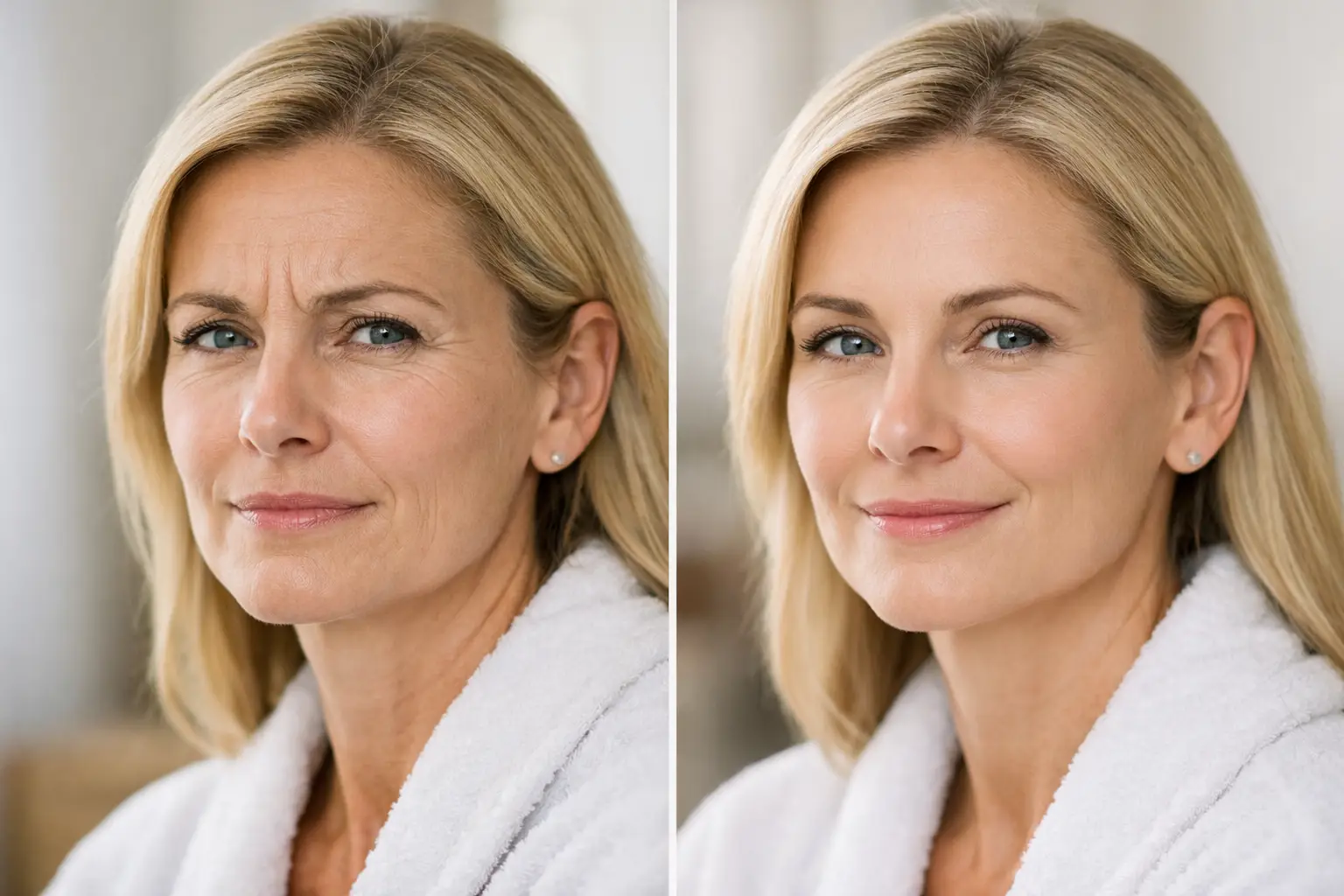
A thoughtful botox before and after example rarely looks dramatic at first glance. The forehead appears more rested, the frown lines soften, and the eyes look brighter – yet the person still looks unmistakably like themselves. That is the standard most discerning patients want: refreshed, balanced, and natural rather than visibly treated.
Botox is not about erasing every expression or creating a frozen finish. When performed by a licensed, experienced provider, it can relax selected muscles responsible for repeated facial creasing while preserving the movement that gives your face personality. The best outcome begins well before the injections, with an understanding of your anatomy, skin quality, lifestyle, and personal aesthetic goals.
A Botox Before and After Example: What Changes
Consider a patient in their early 40s who notices horizontal forehead lines in photographs, a persistent crease between the brows, and fine lines at the outer corners of the eyes. At rest, the lines are beginning to linger. When they smile or concentrate, the movement becomes more pronounced.
Before treatment, the goal is not to remove every line. Some lines may be etched into the skin from years of movement, sun exposure, and changes in collagen. Botox addresses the muscle activity that continues to fold the skin, but it does not replace lost volume, resurface texture, or provide the same result as a filler or laser treatment.
After a customized Botox treatment, the patient may notice that the forehead remains smoother during expression, the “11 lines” between the brows appear softer, and crow’s feet do not deepen as sharply with a smile. Their eyes can appear more open and rested because the brow area is no longer constantly contracting. Friends may comment that they look well-rested without identifying a specific procedure.
That subtle shift is often the most successful before-and-after result. It respects facial proportions, avoids overcorrection, and supports a polished appearance that fits naturally into professional and social life.
The Botox Timeline: What to Expect After Treatment
Botox does not deliver its final effect the moment an appointment ends. Most patients begin to see a change within three to five days, while the full result typically develops around 10 to 14 days. This gradual transition is one reason the treatment can look so natural.
Immediately after injections, small raised bumps or mild redness can occur at the treatment sites. These usually resolve quickly. Minor bruising is possible, especially for patients who are prone to bruising or use certain medications or supplements. Your provider will review your health history and aftercare guidance to help minimize avoidable risks.
At the two-week point, your provider can assess the result. This follow-up matters because a beautiful outcome is not based on a standard number of units. One person’s forehead muscle may be strong and broad, while another person may need a lighter approach to retain preferred movement. A precise plan is more valuable than a one-size-fits-all dose.
For many patients, Botox results last about three to four months. The duration can vary based on metabolism, muscle strength, treatment area, dosage, and how consistently the treatment is maintained. With regular, expertly managed appointments, some patients find that their muscles gradually become less forceful, helping lines stay softer between visits.
Why Natural Results Depend on More Than Units
A common question is, “How many units will I need?” While it is understandable to want a clear number, units alone do not define quality. The right amount depends on your unique facial movement and the outcome you want to achieve.
An experienced provider evaluates the face in motion, not only at rest. They observe how your brows elevate, whether one side moves differently from the other, how strongly you squint, and where your lines form. This helps them place treatment strategically instead of simply following a generic injection map.
Conservative dosing can be an excellent starting point for first-time patients or anyone concerned about looking overdone. A lighter treatment may preserve more expression while softening lines. On the other hand, someone with deeper dynamic lines or strong muscle activity may need a more comprehensive plan to see a meaningful improvement. Neither approach is universally better. It depends on facial anatomy, expectations, and the look that feels right for you.
Natural-looking Botox also requires restraint. Treating one area aggressively without considering the rest of the face can affect balance. For example, the forehead, glabella, and crow’s feet often work together. A customized assessment allows the provider to consider how relaxing one muscle group may influence brow position and overall expression.
What Botox Can and Cannot Improve
Botox is highly effective for dynamic wrinkles – the lines created by repeated muscle movement. These commonly include forehead lines, frown lines, crow’s feet, bunny lines around the nose, chin dimpling, and bands in the neck. It may also be used in other carefully selected areas when clinically appropriate.
However, Botox is not a universal solution for every sign of aging. If a line is visible when the face is completely relaxed, Botox may soften it over time but may not erase it entirely. Fine texture, sun damage, pigmentation, acne scarring, and laxity often benefit from complementary treatments such as microneedling, PRP, medical-grade skincare, or collagen-supporting rejuvenation therapies.
Volume loss is another consideration. If the cheeks have flattened or folds around the mouth have become more pronounced, dermal filler may be a more suitable option than Botox alone. A consultation should clarify which concerns are caused by movement, skin quality, volume changes, or a combination of factors.
This is where an integrated approach can be valuable. Skin health is influenced by clinical treatment, daily skincare, sleep, nutrition, hydration, and recovery. A well-designed aesthetic plan considers the visible concern while also supporting the conditions that help skin look healthier over time.
How to Evaluate Botox Before and After Photos
Before-and-after photographs can be helpful, but they should be viewed with a critical eye. The most useful photos show the same angle, lighting, facial expression, and distance from the camera. A raised eyebrow in one image or softer lighting in another can make results appear more dramatic than they truly are.
Look for consistency and balance rather than perfectly smooth skin. In a high-quality Botox before-and-after example, the forehead should not look unnaturally flat, the brows should remain harmonious, and the patient should still be able to communicate with their face. Pay attention to whether the eyes look refreshed without appearing heavy or surprised.
It is also wise to ask whether the photo was taken at the appropriate point in the treatment timeline. A result photographed too early may not reflect the final effect. A reputable provider will set realistic expectations, explain what can be achieved in one appointment, and recommend a follow-up if refinement is needed.
Choosing a Provider for Safe, Personalized Botox
Botox is a medical treatment, not a casual beauty add-on. Your choice of provider influences both safety and the quality of your result. Look for a licensed professional who performs a thorough consultation, reviews your medical history, explains potential side effects, and is willing to say when Botox is not the best answer for a concern.
At The Skin Health Clinic, treatment planning is designed around natural rejuvenation and lasting skin health. Rather than treating a single line in isolation, your provider considers your facial dynamics, skin condition, wellness priorities, and desired level of correction. The result is a plan that feels personal, refined, and clinically grounded.
You should also feel comfortable communicating your preferences. Bring reference photos if they help you describe the level of movement you want to maintain. Be honest about prior treatments, medications, allergies, and any history of neuromuscular conditions. A transparent conversation allows your provider to make recommendations that place your well-being first.
Questions Patients Often Ask
Will I still look like myself?
Yes, when Botox is placed thoughtfully and dosed appropriately. The goal is to soften excessive movement, not remove your identity or every expression. Tell your provider if preserving forehead movement or a natural smile is especially important to you.
Is there downtime?
Most patients return to their usual activities right away. Your provider may advise avoiding strenuous exercise, rubbing the treated areas, or lying flat for a period after treatment. Follow your individual aftercare instructions closely.
Can Botox prevent lines from becoming deeper?
By reducing repeated muscle contractions, Botox can help limit the folding that contributes to dynamic lines. It works best as part of an ongoing plan that includes sun protection, appropriate skincare, and healthy lifestyle support.
The most compelling Botox result is not a different face. It is the confidence of seeing a rested, refined version of your own features in the mirror – supported by care that respects both your appearance and your long-term skin health.