
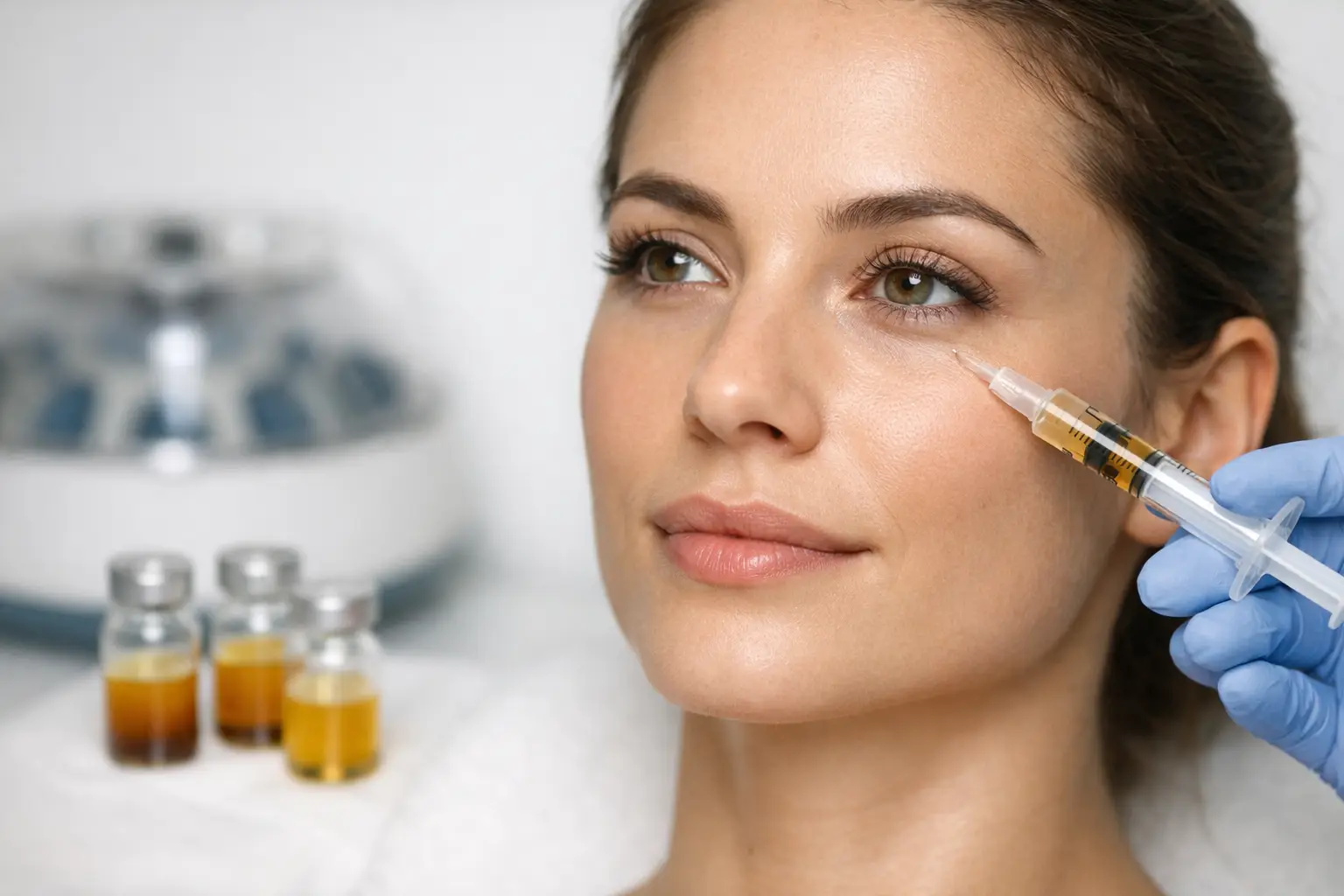
The under-eye area often shows fatigue before the rest of the face does. Fine creasing, a papery texture, and shadows can make someone look less rested even when they feel well. PRP for under eyes is a regenerative treatment designed to improve skin quality using platelet-rich plasma drawn from your own blood. For the right candidate, it can be a refined way to support brighter, smoother, more resilient-looking skin without changing the character of the face.
Unlike treatments that add volume or temporarily relax muscle movement, PRP works with the body’s own growth factors. That distinction matters around the eyes, where the skin is delicate and the most beautiful results tend to look subtle, rested, and entirely natural.
What Is PRP for Under Eyes?
Platelet-rich plasma, or PRP, is created from a small blood sample collected during your appointment. The sample is placed in a centrifuge, which separates and concentrates the platelet-rich portion of the blood. This plasma contains signaling proteins and growth factors involved in the body’s natural repair processes.
When carefully placed in the under-eye area by a licensed, experienced provider, PRP may help encourage collagen production and support healthier skin renewal over time. The goal is not to create dramatic fullness overnight. It is to improve the quality of the skin so the area can appear smoother, firmer, and more luminous.
PRP can be administered through precise injections, microneedling, or a customized combination of both, depending on the concern being addressed. Injectable placement may be preferred when the focus is thin, crepey skin and fine lines, while microneedling can support broader texture concerns. A thorough consultation is essential because the under-eye area is not one-size-fits-all.
What Concerns Can PRP Help Improve?
PRP is best known for supporting skin texture and overall vitality. Patients often explore it when concealer is settling into fine lines, the lower eyelid skin appears thin, or the area has lost some of its healthy reflectivity.
With a personalized treatment plan, PRP may help improve the appearance of fine lines, mild crepiness, dehydration-related texture, and a dull or tired-looking under-eye area. Some patients also notice that the skin looks more even and less fragile as collagen remodeling develops.
It is equally important to understand what PRP cannot reliably correct on its own. Deep tear trough hollows, prominent under-eye bags, significant loose skin, and dark circles caused primarily by genetics or facial anatomy may require another approach. In some cases, a carefully selected filler, energy-based treatment, skin care protocol, or surgical consultation may be more appropriate. In others, combining treatments thoughtfully produces the most balanced outcome.
Dark circles deserve particular attention because they can have several causes. Pigment, visible blood vessels, shadowing from volume loss, allergies, lifestyle factors, and skin thinning can all contribute. PRP may be helpful when thin skin and poor texture are part of the picture, but it should not be presented as a universal solution for every type of darkness.
Why Patients Choose PRP Around the Eyes
For patients who value a natural approach to rejuvenation, PRP offers an appealing advantage: the treatment uses a component of their own blood rather than a synthetic substance. It does not create the immediate plumping effect of filler, but it can support a gradual improvement that feels aligned with the way healthy skin changes.
This makes PRP especially attractive for people who are cautious about looking overtreated. The objective is not for others to notice a procedure. It is for them to notice that you appear refreshed, well cared for, and more like yourself.
Results develop gradually because collagen renewal takes time. Some patients begin to see early changes in skin quality within several weeks, while more meaningful improvement often unfolds over the following months. A series of treatments is commonly recommended, usually spaced several weeks apart, followed by maintenance based on your skin, goals, and response.
The longevity of results varies. Genetics, sun exposure, smoking, stress, sleep, nutritional status, skincare habits, and the natural pace of aging all influence how the under-eye area performs over time. This is why an integrated plan can be more valuable than viewing PRP as a one-time fix.
What Happens During a PRP Under-Eye Appointment?
Your provider begins with an assessment of the under-eye area in the context of your whole face. They will examine skin thickness, volume distribution, pigmentation, puffiness, fine lines, and facial movement. They should also discuss your health history, medications, supplements, previous aesthetic treatments, and desired level of improvement.
Once PRP is determined to be appropriate, a small amount of blood is drawn and processed. A topical numbing cream may be used to maximize comfort. The PRP is then delivered with a precise technique selected for your anatomy and treatment plan.
Appointments are typically efficient, though your first visit may take longer because thoughtful consultation should never be rushed. At The Skin Health Clinic, treatment planning considers both in-clinic rejuvenation and the lifestyle factors that influence how skin repairs, retains hydration, and maintains its glow.
Recovery and Aftercare: What to Expect
PRP generally involves little downtime, but the eye area can show temporary evidence of treatment. Mild swelling, tenderness, pinpoint bleeding, redness, or bruising may occur. For most patients, these effects are manageable and resolve within a few days, although bruising can occasionally last longer.
Your provider will give you individualized aftercare instructions. In many cases, patients are advised to avoid strenuous exercise, excessive heat, alcohol, and makeup for a short period after treatment. Cold compresses may be recommended for swelling, but only as directed. Because certain medications and supplements can affect bruising or platelet activity, be transparent about everything you take before your appointment.
Consistent sun protection is particularly valuable after any rejuvenation treatment. Daily sunscreen, quality topical skincare, adequate hydration, and a nutrient-conscious routine can help protect the investment you are making in your skin.
Is PRP Safe for the Under-Eye Area?
PRP is widely used in aesthetic medicine, and because it is derived from your own blood, the risk of an allergic reaction to the plasma itself is low. Still, it is a medical procedure, not a beauty shortcut. The under-eye area has complex anatomy and should be treated only by properly trained, licensed professionals who understand safe technique, appropriate depth, and when not to treat.
Potential risks can include bruising, swelling, infection, discomfort, uneven results, and temporary changes in skin appearance. While serious complications are uncommon when treatment is performed properly, no injectable procedure is without risk. A reputable provider will discuss benefits and limitations clearly rather than promising a guaranteed result.
PRP may not be suitable for everyone. Pregnancy, active infection, certain blood disorders, low platelet counts, blood-thinning medications, and some autoimmune or medical conditions may affect candidacy. This is one reason a consultation and medical review are essential before scheduling treatment.
How PRP Compares With Under-Eye Filler
PRP and filler are sometimes discussed as if they serve the same purpose, but they address different concerns. Filler is primarily used to restore volume and soften the shadow created by a hollow tear trough. PRP is primarily used to enhance skin quality and encourage collagen-related improvement.
For someone with pronounced hollowness but good skin texture, a conservative filler plan may offer a more visible correction. For someone with thin, crepey skin and mild textural aging, PRP may be the better starting point. Some patients benefit from both, but only when each treatment has a clear purpose and is performed conservatively.
The best choice comes from diagnosis, not trend. A beautiful under-eye result respects facial anatomy, avoids unnecessary volume, and prioritizes long-term skin health over a quick transformation.
Questions to Ask at Your Consultation
Before proceeding with PRP, ask who will perform your treatment, how often they treat the under-eye area, and what technique they recommend for your specific concern. You should also ask how many sessions are likely to be needed, what realistic improvement looks like, and whether another treatment would better address hollows, puffiness, or pigment.
Bring photos that reflect what you would like to improve, but remain open to a professional assessment. The most useful consultation is a conversation about your anatomy, your lifestyle, and the level of change that will look natural on you.
A rested-looking eye area is rarely created by chasing one procedure. It comes from thoughtful clinical care, protective skincare, recovery habits, and a plan built around the way your skin actually behaves. When PRP is the right fit, it can be a graceful investment in skin that looks healthier, not different.