
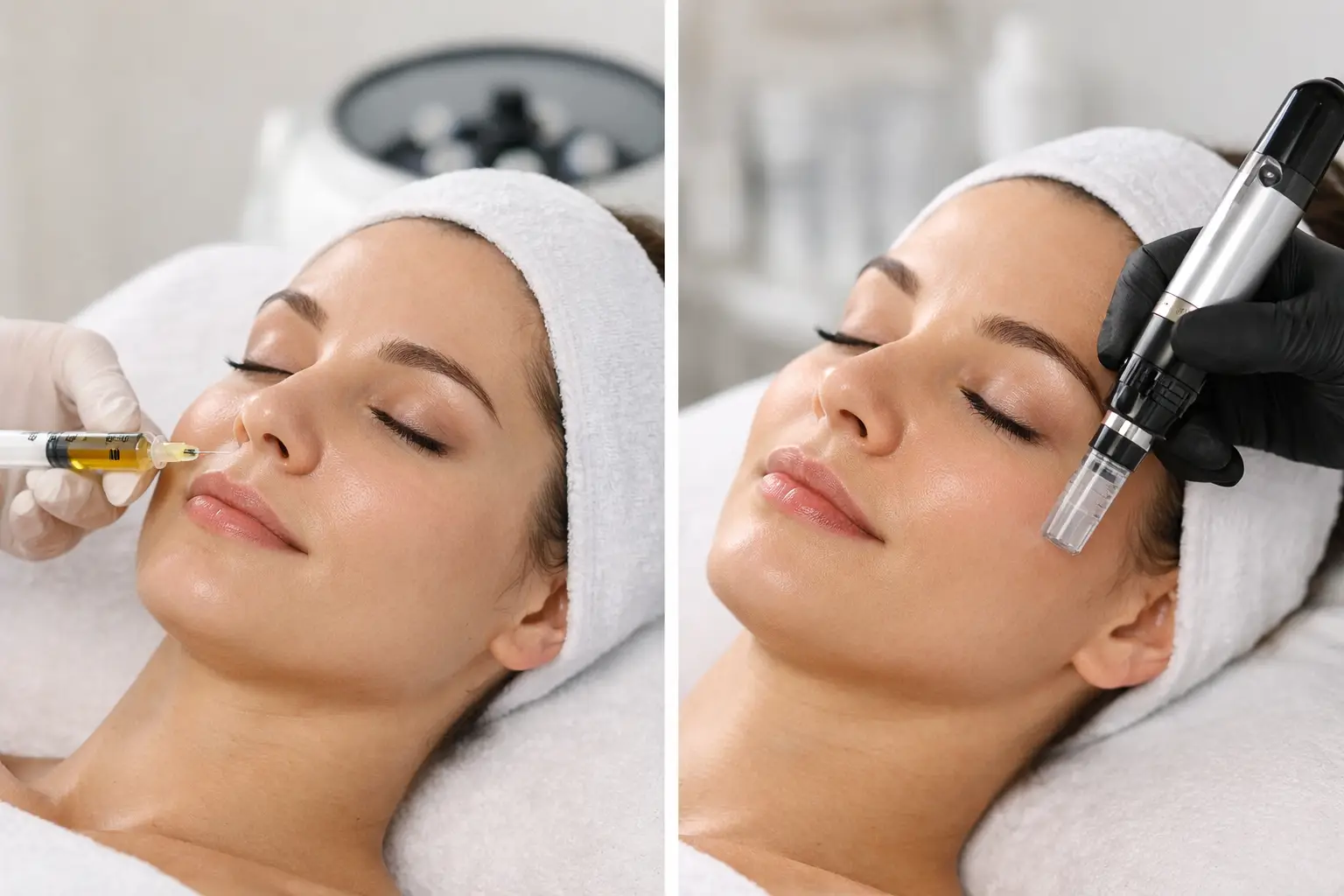
A luminous complexion is rarely about chasing a single trend. It comes from choosing treatments that address what your skin is actually asking for: collagen support, smoother texture, more even tone, or a healthier quality of glow. When comparing a PRP vs microneedling facial, the most meaningful difference is not which option is more advanced. It is which approach aligns with your skin concerns, lifestyle, and long-term rejuvenation plan.
Both treatments can encourage collagen production and create visible refinement over time. Yet they work differently, involve different recovery considerations, and may be more appropriate at different stages of your skin health journey. A thoughtful consultation with a licensed professional can turn that choice into a plan that feels both effective and beautifully natural.
PRP vs Microneedling Facial: The Core Difference
Microneedling uses a clinical device with very fine, sterile needles to create controlled microchannels in the skin. This precise process prompts the body’s natural repair response, supporting new collagen and elastin formation. As skin renews in the weeks that follow, many patients notice improved texture, softer fine lines, smaller-looking pores, and a more refined overall appearance.
PRP, or platelet-rich plasma, begins with a small blood draw. The blood is processed to concentrate platelets and growth factors from your own plasma. Depending on your personalized protocol, PRP may be applied during microneedling to support recovery and rejuvenation, or it may be carefully injected into select areas by an appropriately trained medical provider.
This is where many comparisons become confusing: PRP and microneedling are not always opposing choices. PRP can be a standalone regenerative treatment, while PRP microneedling combines the controlled collagen stimulation of needling with the biologically active components of your own plasma. Standard microneedling, on the other hand, may be performed with a professional serum selected for your skin’s needs.
What Each Treatment Can Help Improve
Microneedling is often an excellent option for people whose priorities are texture and overall skin quality. It can be particularly valuable for early fine lines, enlarged pores, mild acne scarring, uneven texture, and dullness. It does not add facial volume or dramatically alter facial contours. Its value lies in encouraging skin to become smoother, firmer, and more resilient through a gradual process.
PRP is often chosen by patients seeking a more regenerative approach, especially when skin looks tired, crepey, or less vibrant. Because the treatment uses components derived from your own blood, it appeals to clients who want a personalized, science-backed option with a natural focus. PRP may be used for concerns such as fine lines, delicate under-eye quality, acne scars, and overall loss of radiance, depending on the delivery method and the provider’s assessment.
For more pronounced volume loss, deep folds, or lines created by repeated muscle movement, neither treatment should be presented as a replacement for every aesthetic option. Dermal fillers and neuromodulators may have a place in a broader plan. The most elegant outcomes often come from treating skin quality, facial structure, and expression lines as separate concerns rather than expecting one procedure to address all three.
When Combination Treatment Makes Sense
PRP microneedling may be a strong fit when you want to address texture while giving the skin additional regenerative support. The combination is frequently selected for acne scarring, fine lines, sun-related texture changes, and a refreshed quality of tone. Results still develop gradually because collagen remodeling takes time, but some patients appreciate the enhanced glow that can follow treatment.
That does not mean PRP microneedling is automatically the right choice for everyone. If your primary concern is mild roughness or you are beginning a skin maintenance routine, traditional microneedling may provide the focused collagen support you need. If you have significant inflammation, active acne, certain pigment concerns, or a condition that affects healing, timing and treatment selection matter more than choosing the most intensive option.
Results Are Built, Not Rushed
Neither PRP nor microneedling is designed to create an overnight transformation. Some temporary brightness or plumping can appear soon after treatment, but the more meaningful changes emerge as the skin produces new collagen. This process commonly unfolds over several weeks, with continued improvement possible for months.
Most patients benefit from a series rather than a single appointment. The ideal number of sessions depends on your goals, baseline skin quality, scar depth, age, and how your skin responds. Someone treating mild texture may require a different cadence than someone addressing established acne scarring or visible photoaging.
A premium treatment plan also looks beyond the procedure itself. Medical-grade skincare, daily sunscreen, adequate hydration, protein intake, sleep quality, and nutrition can influence how skin looks and recovers. At The Skin Health Clinic, this whole-person perspective helps ensure that in-clinic rejuvenation is supported by habits that protect and extend your results.
Downtime and the Treatment Experience
Microneedling typically creates temporary redness, warmth, and a tight or sunburn-like feeling. For many patients, this is most noticeable during the first 24 to 48 hours. Skin may also feel dry or lightly rough as it recovers. Makeup is generally avoided immediately after treatment, and your provider will give precise aftercare instructions based on your procedure and skin sensitivity.
PRP microneedling has a similar recovery profile, although the experience can vary based on treatment depth and the areas treated. If PRP is injected, mild swelling, pinpoint bruising, or tenderness can occur at injection sites. Recovery is usually manageable, but it is wise to schedule treatment before a quieter few days when possible, particularly before a major event.
During the healing period, protect your investment. Avoid heat-heavy workouts, saunas, aggressive exfoliants, retinoids, and unapproved active products until your provider advises that your skin is ready. Consistent sun protection is essential. Freshly treated skin is more vulnerable to irritation and unwanted pigment changes when exposed to UV light.
Safety Depends on Skill, Screening, and Aftercare
Microneedling and PRP should never be treated as casual beauty services. Technique, device selection, sterile protocols, treatment depth, and proper screening directly influence both comfort and outcomes. Licensed professionals should review your medical history, current medications, history of cold sores, skin conditions, recent cosmetic treatments, and any factors that may affect healing.
PRP may not be appropriate for everyone, including individuals with certain blood disorders, platelet issues, active infection, or particular medical conditions. Microneedling may need to be postponed when there is active acne, eczema, a sunburn, open wounds, or uncontrolled inflammation. A qualified provider will not force a treatment simply because it is popular. They will explain when waiting, adjusting the plan, or choosing another service is safer.
It is also wise to set realistic expectations around pigmentation and scarring. Deeper scars often need a layered strategy and several treatments. Patients with melanin-rich skin can absolutely pursue collagen-stimulating procedures, but settings, pre-treatment skincare, and post-treatment sun avoidance should be selected carefully to help minimize pigment risk.
How to Choose Between PRP and Microneedling
Choose traditional microneedling when your goals center on early signs of aging, pores, mild scars, texture, and maintaining healthy collagen with a relatively straightforward treatment plan. Consider PRP or PRP microneedling when you want to incorporate your own growth-factor-rich plasma into a regenerative approach, particularly for concerns involving skin quality, radiance, or more persistent textural change.
The better question is not simply, Which treatment is stronger? Ask, What is my skin missing, and what can I consistently support? Your provider should examine your skin, listen to your timeline and comfort level, and explain whether one treatment or a carefully sequenced combination is most likely to create the natural-looking improvement you want.
Beautiful skin does not need to look treated. With the right clinical guidance, PRP, microneedling, or a combination of both can become a measured investment in healthier-looking skin that continues to reflect your vitality long after you leave the treatment room.