
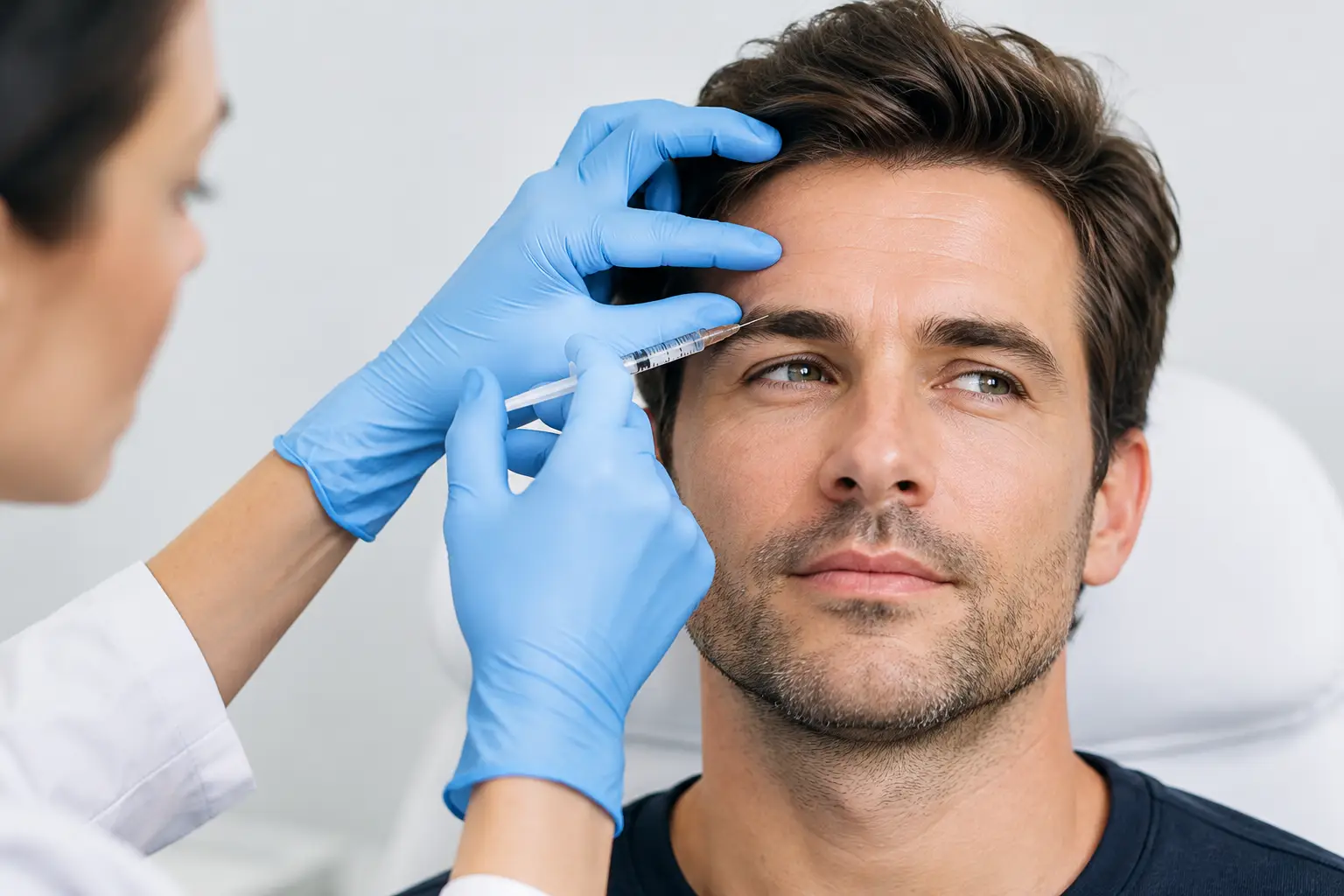
A deep forehead line can make a capable, well-rested man appear stressed before he says a word. That is often the moment the question shifts from abstract to personal: when should men start Botox? The answer is not tied to one birthday. It depends on how your face moves, how your skin is changing, and whether you want to soften early lines or treat creases that have become visible at rest.
For men who value polished, natural-looking rejuvenation, Botox can be a thoughtful part of long-term skin health. The goal is not to erase personality or create a frozen expression. With an experienced, licensed provider, treatment can relax targeted muscles while preserving the character, strength, and movement that make a face recognizably yours.
When Should Men Start Botox?
Some men begin preventative Botox in their late 20s or early 30s, when repeated facial expressions are starting to leave faint lines between the brows, across the forehead, or at the outer corners of the eyes. Others wait until their late 30s, 40s, or beyond, when these lines remain visible even with a relaxed face. Both approaches can be appropriate.
Age matters less than the condition of the skin and the intensity of facial movement. Men often have thicker skin and stronger facial muscles than women, particularly in the forehead and glabella, the area between the eyebrows. This may mean lines develop differently and that dosing requires a more tailored clinical approach. Starting too early simply because of a number on a calendar is unnecessary. Waiting until lines are deeper does not mean you have missed your opportunity, either.
The best time to consider treatment is when you notice a concern that feels consistent with your aesthetic goals: a furrowed expression in photographs, deepening forehead folds, crow’s feet that linger after smiling, or a heavy-looking brow caused by overactive muscles. A professional consultation can determine whether Botox is the right solution or whether your skin would benefit more from medical-grade skincare, microneedling, PRP, hydration support, or a combined plan.
Prevention Versus Correction
Botox is often described as preventative, but that word deserves context. Botox does not stop the aging process. It temporarily reduces the muscle activity that repeatedly folds the skin, which can help prevent expression lines from becoming more etched over time.
For a man in his late 20s or early 30s with lines that appear only while frowning or raising his brows, conservative treatment may help keep the skin smoother between appointments. This can be especially appealing for professionals who spend long hours on video calls, work in client-facing roles, or simply want their expression to better reflect how they feel.
If lines are already visible when the face is at rest, Botox can still make a meaningful difference. Relaxing the underlying muscles can soften their appearance and prevent them from being repeatedly reinforced. However, static lines may not disappear completely with Botox alone. Depending on their depth and the overall quality of the skin, a clinician may recommend complementary rejuvenation treatments that support collagen production, texture, and hydration.
This is why a customized plan is more valuable than a standard number of units. The right treatment considers where lines are forming, whether they are dynamic or static, your skin quality, your lifestyle, and the degree of change you want to see.
Signs You May Be Ready for Botox
Men do not need to wait for dramatic wrinkles to explore treatment. Subtle concerns are often the right reason to schedule a consultation, particularly when they affect confidence or create an expression that does not feel accurate.
You may be ready to discuss Botox if you regularly see a deep “11” line between your brows, forehead creases that are becoming noticeable in photos, or crow’s feet that remain after your smile fades. Some men also notice that they unconsciously raise their brows to compensate for a heavy upper face, creating persistent forehead tension.
The most useful question is not, “Am I old enough?” It is, “What am I seeing in my skin, and what result would feel like me?” A skilled provider can assess your facial anatomy at rest and in motion. That assessment is essential because treating the forehead without considering brow position, eyelid heaviness, and muscle balance can lead to a result that feels less refreshed than intended.
Why Men Need a Different Botox Strategy
Natural results begin with respect for male facial anatomy. Many men want to soften lines without losing a strong brow, a relaxed but engaged expression, or the ability to show emotion naturally. That requires precision, not simply more product.
Men can have stronger muscle contraction, broader treatment areas, and different aesthetic preferences. A treatment approach that works beautifully for one patient may be too subtle, too strong, or placed incorrectly for another. The objective is not a standardized look. It is refinement.
Conservative dosing can be a smart place to start for a first-time patient. Your provider can evaluate how you respond, how long results last, and whether you would prefer more relaxation at a follow-up appointment. Starting with an intentional plan also reduces the risk of overtreatment, which may leave the forehead feeling too still or alter brow movement in a way that does not suit your features.
At The Skin Health Clinic, treatment planning is designed around this kind of individualized care. A comprehensive view of skin health considers not only the lines being treated, but also hydration, sun exposure, skincare habits, recovery, nutrition, and the skin-supporting choices that influence how refreshed you look over time.
What to Expect From Your First Appointment
A premium Botox experience begins before the injection. Your consultation should include a discussion of your health history, medications, prior aesthetic treatments, concerns, and desired level of correction. Your provider should examine your facial movement rather than assessing your face from a single static angle.
The injections themselves are typically quick and use a very fine needle. Most patients describe the sensation as a brief pinch. There can be small raised areas or mild redness immediately afterward, but these generally settle quickly. Your provider will give you personalized aftercare instructions, which may include avoiding strenuous exercise, pressure on the treated areas, and lying flat for a short period after treatment.
Results do not appear instantly. Many patients begin to notice a change within several days, with the full effect developing around two weeks. Botox commonly lasts about three to four months, although metabolism, muscle strength, treatment area, and dose all influence longevity.
Safety Comes Before Aesthetic Goals
Botox should always be performed by qualified, licensed medical professionals who understand facial anatomy and have the judgment to recognize when treatment is not appropriate. Your provider should review potential side effects, which can include temporary bruising, swelling, headache, asymmetry, or, less commonly, temporary eyelid or brow drooping.
You should also disclose all medications, supplements, allergies, neuromuscular conditions, and relevant medical history. Certain health conditions, active skin infections at the injection site, and specific medications may affect whether treatment is suitable. This is not a place for bargain shopping or one-size-fits-all promotions. The quality of the assessment and the expertise behind each injection matter as much as the product itself.
For men considering Botox before a wedding, major presentation, professional headshots, or another important event, plan ahead. Schedule your first treatment at least two to four weeks in advance so results can fully develop and there is time for a follow-up assessment if needed.
Botox Works Best Within a Skin Health Plan
Botox addresses muscle movement. It does not replace daily sunscreen, medical-grade skincare, sleep, hydration, or healthy nutrition. Those elements support the surface quality and resilience of the skin, while Botox helps manage the repetitive movements that create certain lines.
For some men, the most refined results come from combining Botox with treatments that address other aspects of facial aging. Microneedling or PRP may support texture and collagen. Targeted skincare can improve tone, pigment, and hydration. If volume loss is contributing to a tired appearance, dermal filler may be discussed separately. Each treatment has a different role, and the right combination should be based on your goals, anatomy, and comfort level.
Starting Botox is not a declaration that you need to look younger. It can be a considered decision to look more rested, approachable, and aligned with the way you want to show up. The right time is when that goal matters to you, and when a trusted provider can create a plan that protects your natural expression as carefully as it refines it.