
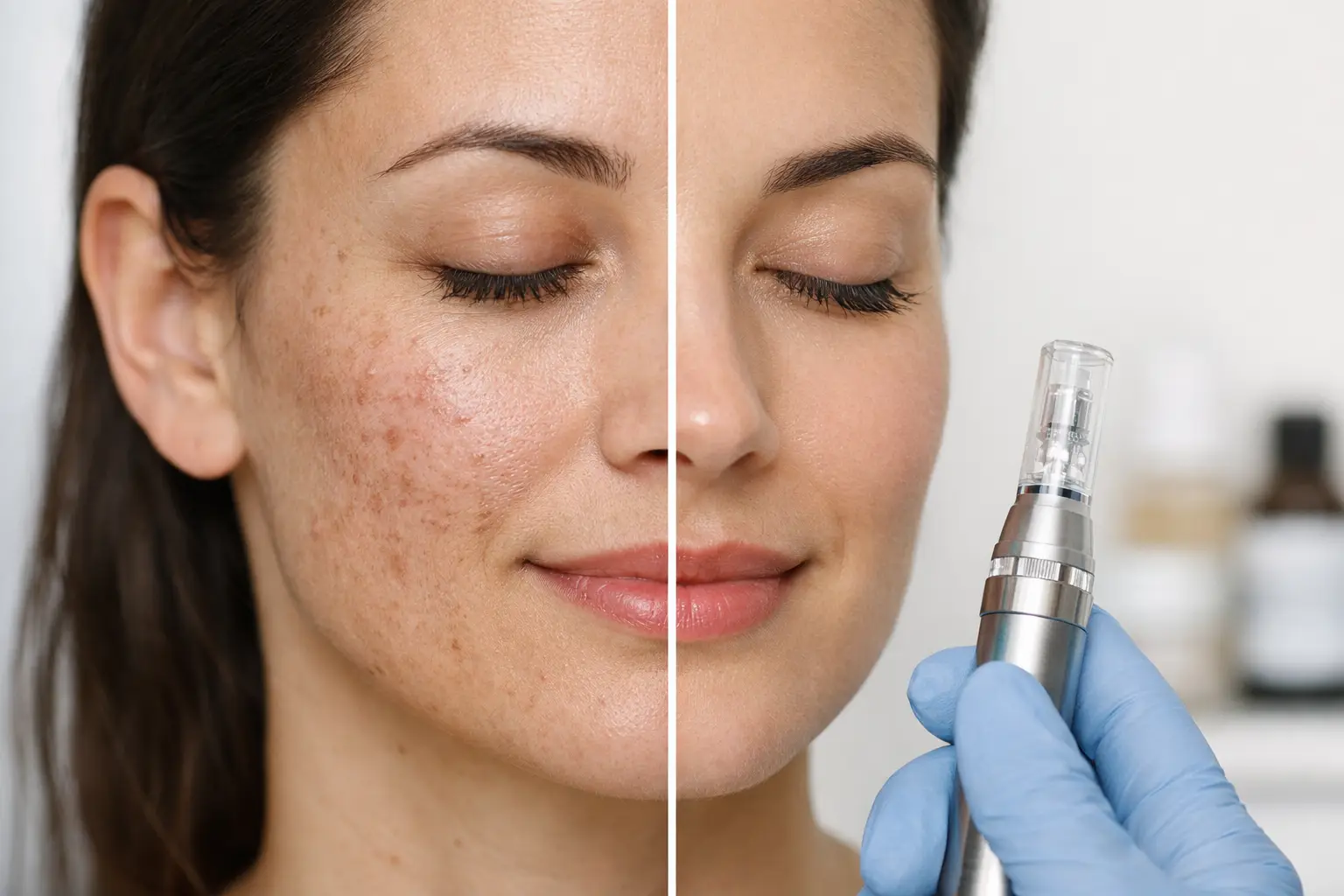
A microneedling acne scar results example is most useful when it shows more than a dramatic before-and-after image. It should reveal the type of scarring treated, the number of sessions completed, the healing period, and the gradual improvement in texture. For patients who feel their acne has healed but their skin still does not reflect how confident they feel, that context matters.
Microneedling is not designed to erase every scar or create an artificial finish. It is a science-backed collagen-induction treatment that can soften the appearance of certain acne scars, refine uneven texture, and help the skin look smoother, healthier, and more even over time. The most natural-looking outcomes come from a plan built around your skin, your scar pattern, and your long-term skin health.
What a Microneedling Acne Scar Results Example Can Show
Consider a patient in her early 30s with mild to moderate rolling scars and shallow boxcar scars across the cheeks. Her active breakouts are controlled, but she notices uneven texture whenever she wears makeup, sits near a window, or sees photographs taken in direct light. Her goals are not flawless, filtered skin. She wants the indentations to appear less obvious and her complexion to look more rested without changing her features.
Following a professional skin analysis, she begins a series of three microneedling treatments, spaced about four to six weeks apart. Her licensed provider also recommends a customized home-care routine focused on barrier support, daily sun protection, and ingredients appropriate for her skin sensitivity.
After the first session, her skin is pink and feels warm for approximately 24 to 48 hours. During the first week, it may feel slightly dry or tight as the surface recovers. She does not see a meaningful change in her scars immediately, which is expected. Microneedling initiates a repair response beneath the surface, and collagen remodeling takes time.
By six to eight weeks after her second treatment, she starts to notice that makeup settles more evenly and the shadowing from her rolling scars is less pronounced. Around three months after her final treatment, her cheeks appear smoother in everyday lighting. The scars are still present, particularly under harsh overhead light, but their edges are softer and her overall skin quality looks more refined. That is a realistic and valuable result: visible improvement that still looks entirely like her.
Why Acne Scar Results Vary So Much
The phrase “acne scars” covers several different concerns. Rolling scars create broad, wave-like depressions and often respond well to collagen-stimulating treatments. Shallow boxcar scars may also improve, while narrow, deep ice-pick scars usually need a different or combined approach. Post-acne redness and dark marks are not true textural scars, though they can make the complexion look uneven and may require separate treatment planning.
Scar age, skin tone, genetics, active inflammation, sun exposure, and overall healing capacity can all influence results. A person with longstanding, deeper scars should expect improvement rather than complete removal. Someone with early, shallow textural changes may see a more noticeable refinement with fewer sessions.
Treatment depth also matters. Professional microneedling is customized to the area being treated and the skin’s condition. At-home devices cannot safely replicate the precision, sterility, or clinically guided treatment depth offered in a medical aesthetics setting. For acne scarring, this distinction is especially meaningful because excessive trauma or improper technique can aggravate inflammation and compromise the skin barrier.
The Timeline: When Results Become Visible
Microneedling rewards patience. Immediately after treatment, temporary swelling can make the skin look plumper, which is not the final outcome. As that settles, some patients briefly feel as though their texture is unchanged. The more meaningful changes develop as new collagen and elastin support the treated areas.
Most patients follow a pattern like this:
- Days 1-3: Redness, warmth, mild swelling, and sensitivity similar to a light to moderate sunburn.
- Days 3-7: Dryness or light flaking may occur. The skin barrier should be protected with gentle, provider-approved skincare.
- Weeks 2-4: The complexion begins to feel calmer and may look brighter or more even.
- Weeks 6-12: Early texture improvement becomes more visible as collagen remodeling progresses.
- Three to six months: Results from a completed series continue to mature, particularly when healthy skin habits support recovery.
For acne scarring, a series of three to six treatments is common, although the right number depends on scar type, desired improvement, downtime preferences, and whether combination treatments are recommended. Maintenance treatments may be appropriate for patients who want to continue supporting collagen production and overall skin rejuvenation.
What Supports Better-Looking, Longer-Lasting Results
The treatment itself is only one part of the plan. Skin that is inflamed, dehydrated, over-exfoliated, or repeatedly exposed to ultraviolet damage may not heal as predictably. This is why premium care should look beyond the appointment itself.
Before treatment, active acne should be assessed and managed. Treating over active, inflamed lesions is not always appropriate, and controlling breakouts helps prevent new scars from forming while existing texture is addressed. Your provider may also advise pausing certain active skincare ingredients before and after treatment, depending on your regimen and skin sensitivity.
After treatment, gentle cleansing, consistent hydration, and broad-spectrum sunscreen are essential. Avoid picking, aggressive exfoliation, excessive heat, and unapproved products while the skin recovers. For patients concerned with long-term vitality, nutritional habits, hydration, sleep quality, and personalized vitamin support can also be meaningful parts of a whole-body approach to skin health.
At The Skin Health Clinic, treatment planning is designed around these connected factors. A licensed provider can evaluate not only the visible scarring but also acne history, skin tone, sensitivity, lifestyle, and recovery needs. This helps determine whether microneedling is the right first step or whether it should be paired with other clinically appropriate rejuvenation therapies.
When Microneedling May Need a Combination Approach
Microneedling can be an excellent option, but it is not the answer to every scar pattern. Deep tethered rolling scars may benefit from a procedure that releases the scar before collagen stimulation is introduced. Very deep ice-pick scars often require more targeted care. Persistent redness, pigmentation, and active acne may need to be stabilized first so that texture treatment can proceed safely.
This is not a limitation of microneedling. It is the value of an individualized plan. The strongest outcomes often come from matching the treatment to the biology of the scar rather than forcing every concern into a single service.
A consultation should also include an honest discussion of skin tone and pigment risk. Patients prone to post-inflammatory hyperpigmentation need thoughtful preparation, careful treatment settings, and a diligent aftercare plan. Skilled providers account for this from the start, rather than treating it as an afterthought.
What to Look for in Before-and-After Photos
When reviewing acne scar results, look beyond the most flattering image. Credible photos are taken in similar lighting, with a comparable angle and facial expression. Pay attention to whether the patient’s scars have become less shadowed, whether texture appears more even, and whether the skin still looks healthy and natural.
Be cautious of photographs taken immediately after treatment, when temporary swelling can mask indentation, or images with dramatically different lighting. A trustworthy microneedling acne scar results example should set realistic expectations: improvement can be substantial, but it is gradual, personal, and influenced by the type of scar being treated.
Your skin does not need to be perfect to look renewed. With expert assessment, clinically guided treatment, and care that supports healing from the inside and out, smoother texture and greater confidence can be realistic goals worth pursuing.