
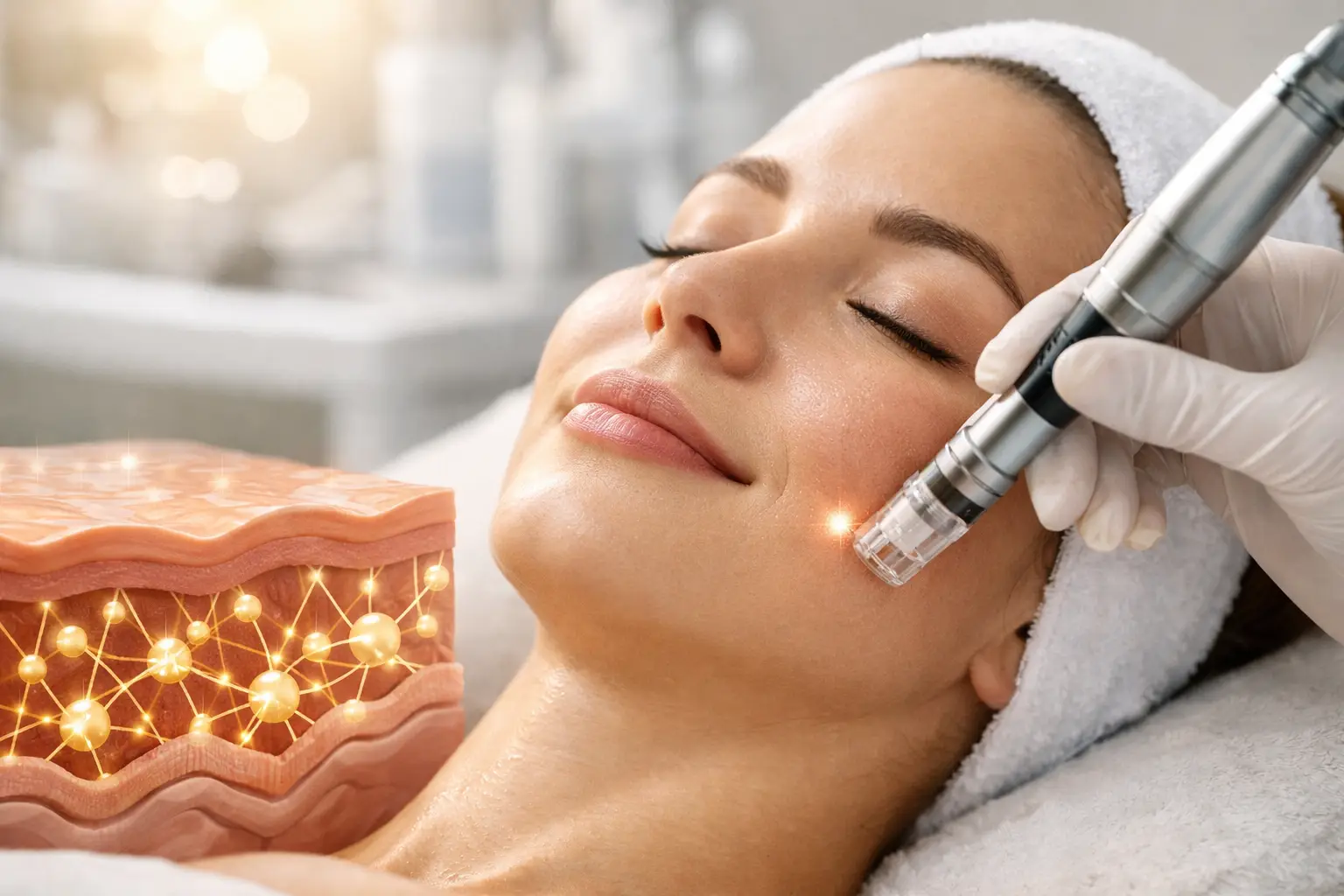
A complexion can look tired long before it looks dramatically aged. Fine lines begin to catch makeup, pores appear more visible, acne scars hold onto shadow, and skin may lose the smooth, resilient quality that once seemed effortless. Understanding how microneedling boosts collagen production helps explain why this treatment has become a trusted option for patients seeking natural-looking rejuvenation without changing the character of their face.
Microneedling is not about forcing a quick surface-level glow. When performed by licensed professionals with the right technique and treatment depth, it works with the skin’s own repair processes to encourage firmer, smoother, more refined-looking skin over time.
How Microneedling Boosts Collagen Production in the Skin
Microneedling uses a medical-grade device with very fine, sterile needles to create controlled microchannels in the skin. These tiny, precisely placed openings trigger the body’s normal wound-healing response while preserving the surrounding tissue. The treatment is customized according to the area being treated, your skin condition, your goals, and your tolerance for downtime.
Once the skin recognizes these controlled micro-injuries, it moves into repair mode. Blood flow increases, signaling molecules are released, and fibroblasts – the cells responsible for producing collagen and elastin – become more active. Collagen provides structure and firmness; elastin supports flexibility and bounce. Together, they help create skin that feels stronger and looks more even.
The immediate response is inflammation, which is a normal and intentional part of the process. Over the following days and weeks, the skin begins producing new collagen and reorganizing existing collagen fibers. This is why microneedling results develop gradually rather than appearing all at once. A temporary post-treatment glow may be visible early, but the more meaningful improvements in texture, firmness, and scar appearance tend to build over several weeks.
For many patients, this gradual progression is part of the appeal. The goal is not to look suddenly different. It is to support skin that looks rested, healthier, and more resilient in a way that still feels recognizably your own.
What Collagen Renewal Can Improve
Collagen induction therapy can be especially valuable when the concern is not simply a single line or a lack of facial volume, but the overall quality of the skin. As collagen remodeling progresses, microneedling may help soften the appearance of fine lines, rough texture, enlarged pores, and certain types of acne scarring. It can also improve the look of mild laxity and uneven tone.
Results depend on the concern being treated. Shallow textural irregularities often respond differently than deeper, tethered acne scars. Fine lines may improve with microneedling alone, while more pronounced wrinkles, volume loss, or dynamic expression lines may benefit from a plan that includes other aesthetic treatments. During a thoughtful consultation, your provider can distinguish between what microneedling can realistically address and where another approach may deliver a better result.
Microneedling can also enhance the application of carefully selected topical products immediately after treatment, because the temporary microchannels allow for improved product delivery. This does not mean every serum belongs on freshly treated skin. Clinical-quality products and post-procedure protocols matter, particularly for patients prone to irritation, pigmentation changes, or breakouts.
Why Professional Technique Matters
The phrase “microneedling” can describe very different experiences. At-home rollers and consumer devices do not provide the precision, sterility, or adjustable depth of a professional treatment. They can also create unnecessary irritation when used too aggressively or too frequently.
A licensed provider evaluates skin thickness, sensitivity, acne history, pigmentation risk, current skincare, and treatment goals before selecting a technique. The delicate skin around the eyes requires a different approach than the cheeks, jawline, or acne-scarred areas of the face. This level of customization supports both safety and a more refined outcome.
Professional care is particularly important for deeper skin tones and anyone with a history of post-inflammatory hyperpigmentation. Microneedling can be appropriate for many skin types, but settings, pre-treatment preparation, and aftercare should be selected with care to reduce unnecessary inflammation.
The Treatment Experience, Step by Step
A microneedling appointment begins with a consultation and skin assessment. Your provider will discuss your concerns, review relevant health history, and identify whether active breakouts, irritation, medications, or other factors suggest postponing treatment. A customized plan may include recommendations for skincare, nutrition, hydration, or complementary services that support your wider skin-health goals.
On treatment day, the skin is cleansed and a topical numbing agent is usually applied for comfort. The provider then guides the microneedling device across the treatment area using settings tailored to your skin and the concern being addressed. Most patients describe a light pressure or vibration sensation rather than significant pain.
Afterward, the skin commonly looks pink to red and may feel warm or tight, similar to a mild sunburn. This typically settles within one to three days, though redness can last longer depending on the treatment intensity and your individual skin response. Some mild dryness or flaking may follow as the skin renews itself.
For the first 24 hours, patients are generally advised to keep the routine simple: avoid makeup, strenuous workouts, heat exposure, swimming, and potentially irritating active ingredients. Sun protection is essential during recovery and beyond. Freshly treated skin is more vulnerable to UV exposure, and protecting it is central to preserving the collagen-supporting benefits of treatment.
How Many Microneedling Sessions Are Needed?
One session can leave skin looking refreshed, but collagen remodeling is cumulative. Many patients benefit from a series of treatments spaced several weeks apart, especially when treating acne scars, visible pores, or more established texture concerns. The appropriate number of appointments depends on the severity of the concern, your skin’s response, and the result you hope to achieve.
Maintenance matters, too. Collagen production naturally slows with age, while sun exposure, stress, smoking, sleep disruption, and nutritional gaps can affect the skin’s ability to recover. A personalized maintenance schedule can help sustain results while respecting your lifestyle, budget, and tolerance for downtime.
At The Skin Health Clinic, microneedling is approached as one part of a long-term rejuvenation strategy, not a one-size-fits-all appointment. For some patients, pairing microneedling with PRP may be appropriate. For others, a medical-grade skincare protocol, nutritional support, or another treatment may be the more meaningful next step. The right plan is the one that addresses your skin as it is now and supports where you want it to go.
Is Microneedling Right for Everyone?
Microneedling is widely used, but it is not the right choice at every moment. Treatment may need to be delayed if you have active acne lesions, an active skin infection, a cold sore outbreak in the treatment area, significant inflammation, or open wounds. Certain medications, a history of abnormal scarring, and medical conditions affecting healing should also be discussed before scheduling.
Pregnancy, recent use of specific prescription acne medications, and procedures that have already stressed the skin may change the timing or design of your plan. Honest disclosure during consultation protects your health and gives your provider the information needed to recommend the safest path forward.
The best candidates are not necessarily those with “perfect” skin or a single concern. They are patients who want to improve skin quality gradually, are willing to protect their results with consistent skincare and sunscreen, and value a clinically guided approach over quick fixes.
Supporting Your Collagen Beyond the Appointment
Microneedling creates a valuable opportunity for renewal, but the skin still needs the conditions to repair well. Consistent broad-spectrum sunscreen, a provider-approved skincare routine, adequate protein, hydration, quality sleep, and stress management all support the environment in which collagen is built and maintained.
This is where a more complete view of skin health becomes especially valuable. A treatment can stimulate the repair process, but daily habits influence the quality and longevity of what the skin creates in response. Patients who combine professional rejuvenation with thoughtful internal wellness often see their investment as more than a cosmetic change – it becomes a commitment to lasting skin vitality.
If your skin no longer reflects how energized and confident you feel, a personalized consultation can clarify whether microneedling is the right next step. The most rewarding results begin with an expert plan that respects your skin’s biology, your goals, and your long-term health.