
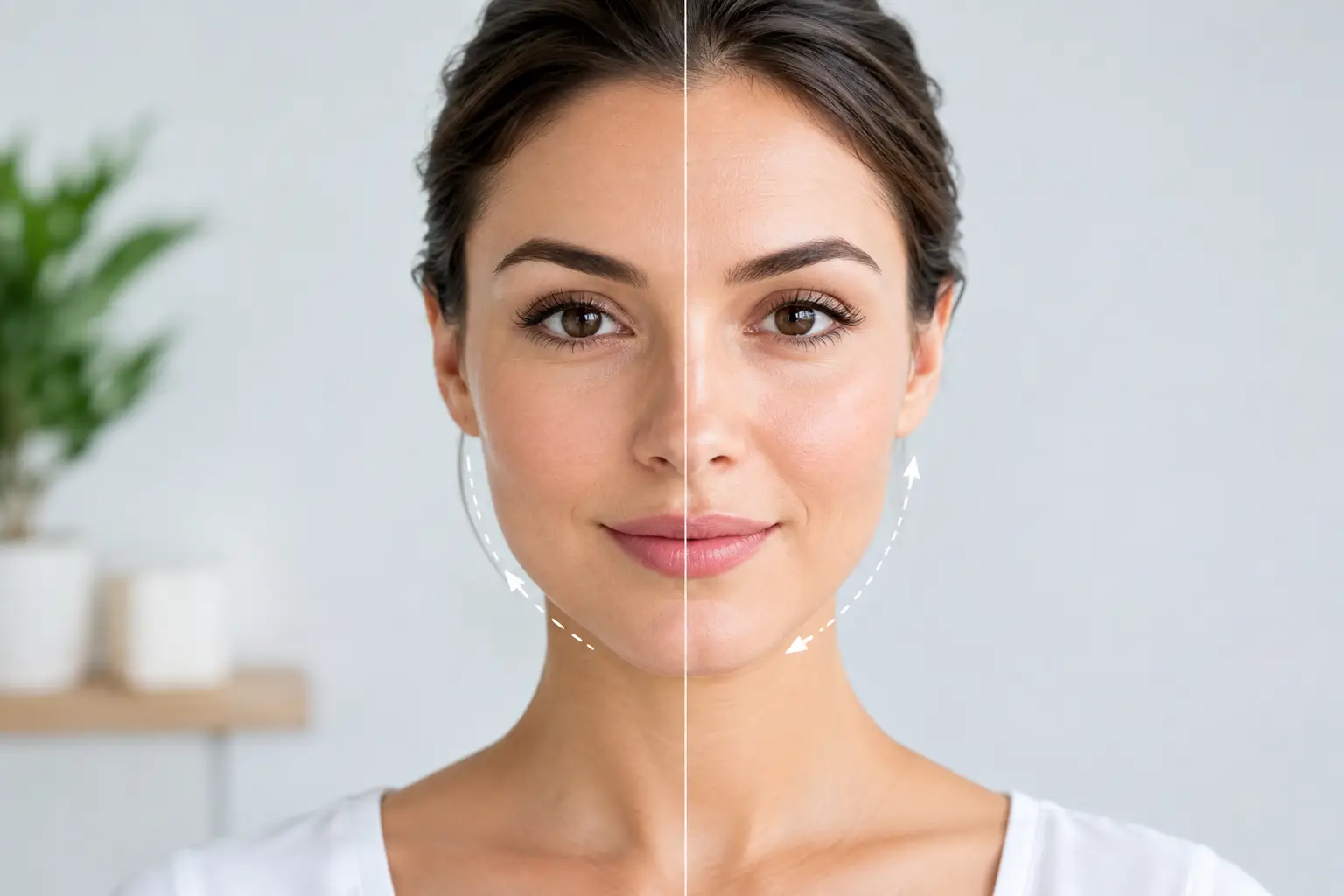
A slightly higher brow, a softer cheek on one side, or a jawline that appears more defined in photos than in the mirror can draw attention in ways that feel frustratingly personal. Facial asymmetry correction is not about pursuing mathematical perfection. It is a thoughtful, medically informed approach to creating greater harmony while preserving the expressions, proportions, and character that make your face distinctly yours.
At a premium aesthetics clinic, the goal is refinement rather than reinvention. The most compelling results rarely announce themselves as treatment. They simply allow you to look rested, balanced, and more like yourself.
Why Facial Asymmetry Happens
No face is perfectly symmetrical. In fact, natural variation is part of what makes a face expressive and recognizable. One eye may sit slightly differently, one side of the mouth may lift more when you smile, or one cheek may carry volume in a different way. These differences can be genetic, developmental, or simply the result of how facial muscles and soft tissue work over time.
Aging can make asymmetry more noticeable. Facial fat pads shift and diminish at different rates, collagen production slows, and skin laxity may develop more prominently on one side. Repeated sleeping positions, sun exposure, dental changes, prior injury, and habitual expressions can all influence how the face changes.
This is why a single treatment or a generic number of units is rarely the right answer. An elevated brow may relate to muscle activity, for example, while uneven cheeks may be more connected to volume distribution. A careful assessment identifies the cause before a treatment plan is considered.
Facial Asymmetry Correction Starts With Assessment
A personalized consultation should look at more than the area that concerns you. Your licensed provider evaluates facial proportions at rest and in motion, skin quality, underlying volume, muscle pull, and the way your features relate to one another. Lighting, posture, and even the angle of a selfie can exaggerate differences, so an experienced clinical eye is essential.
The conversation also matters. Some clients want a subtle softening of a visible imbalance; others are concerned that one side of their face has aged faster than the other. Your goals, treatment history, medical considerations, and comfort with downtime should shape the recommendation.
At The Skin Health Clinic, customized planning is central to the experience. Rather than treating a single line or feature in isolation, we consider how targeted aesthetic care, skin rejuvenation, and supportive wellness habits can work together for a more polished, lasting result.
What a Provider May Evaluate
During a comprehensive facial assessment, your provider may consider brow position, forehead movement, eyelid appearance, cheek projection, smile balance, lip shape, jawline contour, chin projection, and skin texture. They will also assess whether the concern is primarily cosmetic or whether it may warrant evaluation by a dental, surgical, or other medical specialist.
Injectable treatments can improve many subtle cosmetic asymmetries, but they are not a substitute for care when there is sudden facial weakness, new drooping, numbness, difficulty speaking, or other acute symptoms. Those changes require prompt medical attention.
Treatments That Can Create a More Balanced Appearance
The right approach depends on what is creating the visual imbalance. For some clients, small, precise adjustments provide an elegant improvement. For others, restoring structural support or improving skin quality makes the greatest difference.
Neuromodulators for Muscle-Related Imbalance
Botox and other neuromodulators can be especially useful when asymmetry is caused by uneven muscle movement. A stronger forehead muscle on one side may lift a brow higher. Differences in the muscles around the eyes, mouth, or jaw may also affect expression and contour.
With strategic placement and conservative dosing, a licensed provider can soften overactive muscle pull and help create a more even appearance. This requires technical judgment. Treating both sides identically is not always balanced treatment, because the muscles may not have the same strength or pattern of movement.
Results typically develop gradually over several days, with full effect often visible within about two weeks. Because facial movement changes over time, ongoing assessment is valuable, particularly for clients who want results that remain natural rather than overly restricted.
Dermal Fillers for Volume and Structural Support
Dermal fillers can address asymmetry related to volume loss, under-projection, or differing facial contours. Carefully placed filler may enhance a flatter cheek, improve chin balance, refine the jawline, or restore support around areas where one side appears more hollow.
The best filler treatment is measured, not maximal. Adding volume without considering facial structure can create heaviness or draw more attention to the imbalance. A sophisticated plan may use very small amounts in precise locations, then allow time for the face to settle before deciding whether further refinement is appropriate.
Hyaluronic acid fillers are commonly chosen because they can be tailored to different areas and aesthetic goals. Your provider should discuss the product selected, expected longevity, possible swelling or bruising, and the rare but serious risks that make treatment by trained medical professionals so important.
Skin Rejuvenation for a More Even Canvas
Sometimes asymmetry is less about shape and more about surface quality. Uneven pigmentation, acne scarring, texture changes, or looser skin on one side of the face can make a structural difference appear more pronounced.
Microneedling, PRP treatments, and tailored rejuvenation therapies can support collagen production and improve overall skin quality over a series of treatments. Medical-grade skincare can further support tone, hydration, and barrier health between appointments. These treatments do not reposition facial structure, but they can make the complexion look more refined and cohesive.
For clients focused on long-term skin performance, internal support deserves attention as well. Nutrition-guided vitamin protocols and appropriate wellness strategies may complement aesthetic treatments by supporting recovery, hydration, and the broader conditions that influence skin vitality. They are not a replacement for medical care or injectables, but they can be a meaningful part of a comprehensive plan.
What Natural Results Actually Look Like
A successful correction should not erase every difference between the right and left sides of the face. It should reduce the imbalance that distracts you while keeping your expressions believable and your features proportionate.
Natural-looking results often come from restraint. You may notice that makeup sits more evenly, photos feel more flattering, or your profile appears more harmonious. Friends may simply say you look well-rested. That is often the standard worth aiming for.
It also helps to understand that results are not always immediate. Neuromodulators need time to take effect. Filler may involve temporary swelling, and collagen-focused treatments work gradually as the skin remodels. Planning ahead of an event and allowing time for follow-up is a wise part of premium aesthetic care.
Safety, Expectations, and Choosing the Right Provider
Facial balancing is highly technique-dependent. The face contains complex anatomy, and even small changes can have a significant effect on proportion and expression. Choose a clinic where treatments are performed by licensed, experienced professionals who prioritize consultation, informed consent, and conservative clinical judgment.
Be candid about prior injectables, allergies, medications, dental work, medical conditions, and any history of facial surgery or trauma. Your provider should explain what treatment can reasonably improve, what it cannot change, and whether a staged plan is safer or more appropriate than addressing everything in one visit.
There are trade-offs. A treatment that improves one feature may make another feature appear more prominent, which is why whole-face planning matters. Some asymmetries are best improved rather than completely corrected. Others may have skeletal, dental, or functional causes that require a different type of specialist. Honest guidance protects both your safety and your result.
A More Considered Way Forward
If a facial difference has started to affect your confidence, begin with a consultation rather than a trend or a heavily filtered reference photo. Bring attention to what you notice in daily life, whether it is a brow that sits differently, an uneven smile, or facial volume that no longer feels balanced.
The right plan should feel considered, never rushed. With careful assessment, science-backed treatments, and a commitment to your individual anatomy, facial refinement can be an act of self-care that honors your natural features and supports the confidence you carry into every room.