
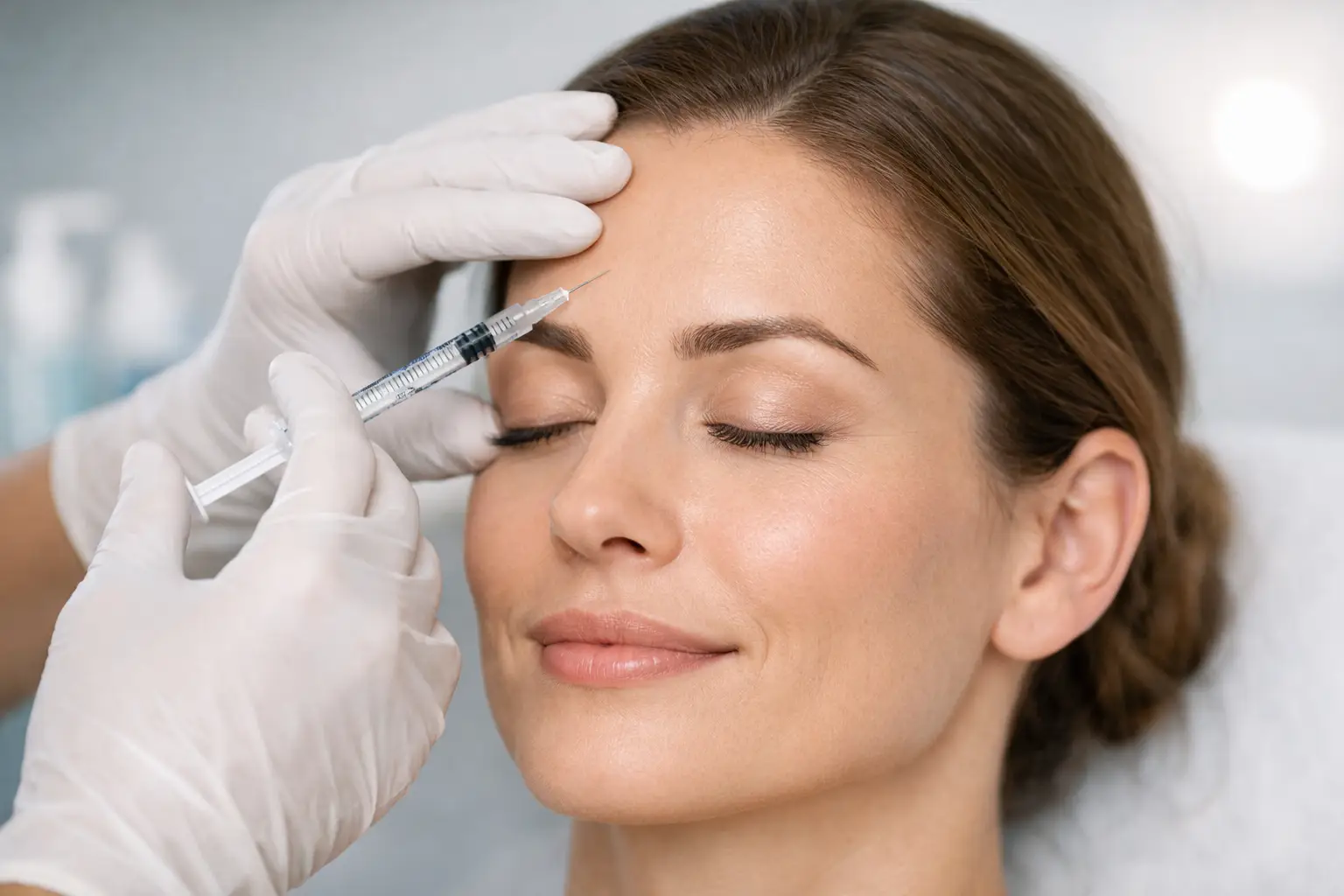
Forehead lines often appear long before the rest of the face feels noticeably aged. They can make an otherwise rested, vibrant expression look tense, concerned, or tired – especially under office lighting, on video calls, and in close-up photos. Understanding how Botox softens forehead lines begins with one key distinction: many of these lines are created by repeated muscle movement, not simply by changes in the skin itself.
Botox is a refined, science-backed treatment that temporarily reduces the pull of selected facial muscles. When planned carefully by a licensed professional, it can soften the appearance of forehead lines while preserving the natural movement that makes your expression feel like your own. The goal is not a frozen forehead. It is a more relaxed, refreshed appearance that still looks unmistakably you.
What Causes Forehead Lines?
The frontalis muscle spans the forehead and lifts the brows. Every time you raise your eyebrows in conversation, react to a message, or concentrate, this muscle contracts. Over years of repeated motion, the skin folds in the same places and horizontal lines begin to appear.
At first, these are dynamic lines, meaning they are visible mostly when the forehead moves. As collagen, elastin, and hydration decline with age, frequent sun exposure, stress, and lifestyle factors, the folds can become etched into the skin even at rest. These are commonly called static lines.
This is why a thoughtful treatment plan matters. Botox addresses the muscular movement that contributes to the lines, but deeply established static lines may also benefit from a broader skin rejuvenation plan. Medical-grade skincare, collagen-supporting treatments, nutrition-guided wellness support, and consistent sun protection can all play a role in improving overall skin quality.
How Botox Softens Forehead Lines
Botox is a neuromodulator. It works by temporarily limiting communication between a nerve and the specific muscle it is intended to treat. In the forehead, carefully placed injections reduce how strongly the frontalis muscle contracts. With less repetitive folding, the skin over the muscle has an opportunity to lie smoother.
The change develops gradually. Most patients begin to notice a softening within several days, with results typically becoming more apparent over the following one to two weeks. The forehead often looks calmer at rest, and lines are less pronounced when the brows lift.
Botox does not fill creases from beneath the skin in the way a dermal filler can restore volume. Nor does it erase every line instantly. Its strength is prevention and softening: it reduces the repeated movement that keeps expression lines active. For early dynamic lines, this may create a beautifully subtle improvement. For lines that have become deeply set, Botox can still help substantially, though the skin may need time and complementary treatments to improve its surface texture.
Why placement is more important than simply using more Botox
The forehead is one of the most technique-sensitive areas of the face. The frontalis muscle lifts the brows, while muscles between and around the brows pull them downward. Treating only one area, or treating the forehead too aggressively, can affect brow position and make the upper face feel heavier.
A skilled provider evaluates your natural brow height, eyelid anatomy, facial symmetry, muscle strength, and the way your expressions move before recommending a dose. Some patients need a lighter touch to retain a soft brow lift and expressive movement. Others have stronger muscle activity and may require a different placement pattern or an adjustment at a follow-up visit.
This individualized approach is central to natural-looking rejuvenation. A treatment should respect the architecture of your face rather than apply a standard number of units to every patient.
What a Forehead Botox Appointment Feels Like
A consultation should come before treatment. Your provider will discuss what you see in the mirror, how you want to look and feel, your medical history, current medications, previous aesthetic treatments, and any upcoming events. You may be asked to lift, relax, and furrow your brows so your provider can map the movement of your forehead.
The injections themselves are brief and performed with a very fine needle. Most patients describe the sensation as a series of quick, light pinches. Mild redness, pinpoint swelling, or small bumps at the injection sites can occur immediately afterward, but these usually settle quickly.
Your provider will give personalized aftercare instructions. In general, patients are advised not to rub or massage the treated area right away and to follow guidance around strenuous exercise, facial treatments, and makeup application. These details may vary based on your treatment plan, so your provider’s instructions should always take priority.
How Long Do Results Last?
For many patients, forehead Botox results last about three to four months. The timeline is personal. Metabolism, dose, muscle strength, treatment history, and lifestyle can all influence how long the effects remain visible.
With regular, appropriately timed maintenance, some people find that their forehead lines become less deeply ingrained because the skin spends less time repeatedly folding. That does not mean everyone should follow the same schedule. Over-treating can compromise natural facial expression, while waiting longer may be entirely appropriate for someone who prefers more movement.
The right cadence is the one that aligns with your anatomy, aesthetic preferences, and long-term skin health goals. During follow-up visits, an experienced provider can refine the plan based on how your face responded rather than relying on assumptions.
Botox for Forehead Lines: Natural Results Depend on the Whole Picture
A smooth forehead can look out of balance if other concerns are overlooked. For example, a patient may be bothered by horizontal forehead lines but also have pronounced frown lines, sun-related texture changes, dehydration, or a brow position that requires a particularly conservative approach.
This is where integrated aesthetic care offers greater value than a quick appointment focused on one isolated area. Your provider may recommend Botox alone, or they may discuss supportive options based on your skin assessment. Microneedling or other rejuvenation therapies may support texture and collagen. Medical-grade skincare can help protect and renew the skin barrier. Personalized nutrition and vitamin protocols can support the internal factors that contribute to skin vitality.
These services are not substitutes for one another, and not every patient needs every option. Botox treats muscle-driven movement. Skin treatments target skin quality. Wellness support helps address the habits and nutritional foundations that influence how the skin performs over time. A customized plan makes these choices intentional rather than excessive.
Is Botox Safe for Forehead Lines?
When Botox is prescribed and administered by a qualified, licensed medical professional, it has a long history of aesthetic use. Like any medical treatment, it carries potential risks and is not appropriate for everyone. Bruising, temporary tenderness, headache, asymmetry, or an undesired change in brow or eyelid position are possible, though careful assessment and precise technique help reduce these risks.
Be transparent during your consultation. Tell your provider about allergies, neurological conditions, pregnancy or breastfeeding status, medications, supplements, and previous reactions to injectable treatments. Choosing a clinical setting with experienced providers matters, particularly in the forehead, where a few millimeters can influence the final result.
At The Skin Health Clinic, treatment planning is designed around your features, your comfort, and your long-term goals. That means recommending an appropriate approach, including when a more conservative dose or a different treatment may serve you better.
When Should You Consider Treatment?
There is no single “right” age to begin Botox. Some adults choose treatment when forehead lines first appear with movement, while others wait until the lines are visible at rest. The more useful question is whether the lines are affecting how you feel when you see yourself in photos, at work, or in everyday life.
If you want your forehead to look softer without changing your identity, a personalized consultation is the right place to start. You deserve clear guidance, realistic expectations, and a plan that values both visible rejuvenation and lasting skin health.