
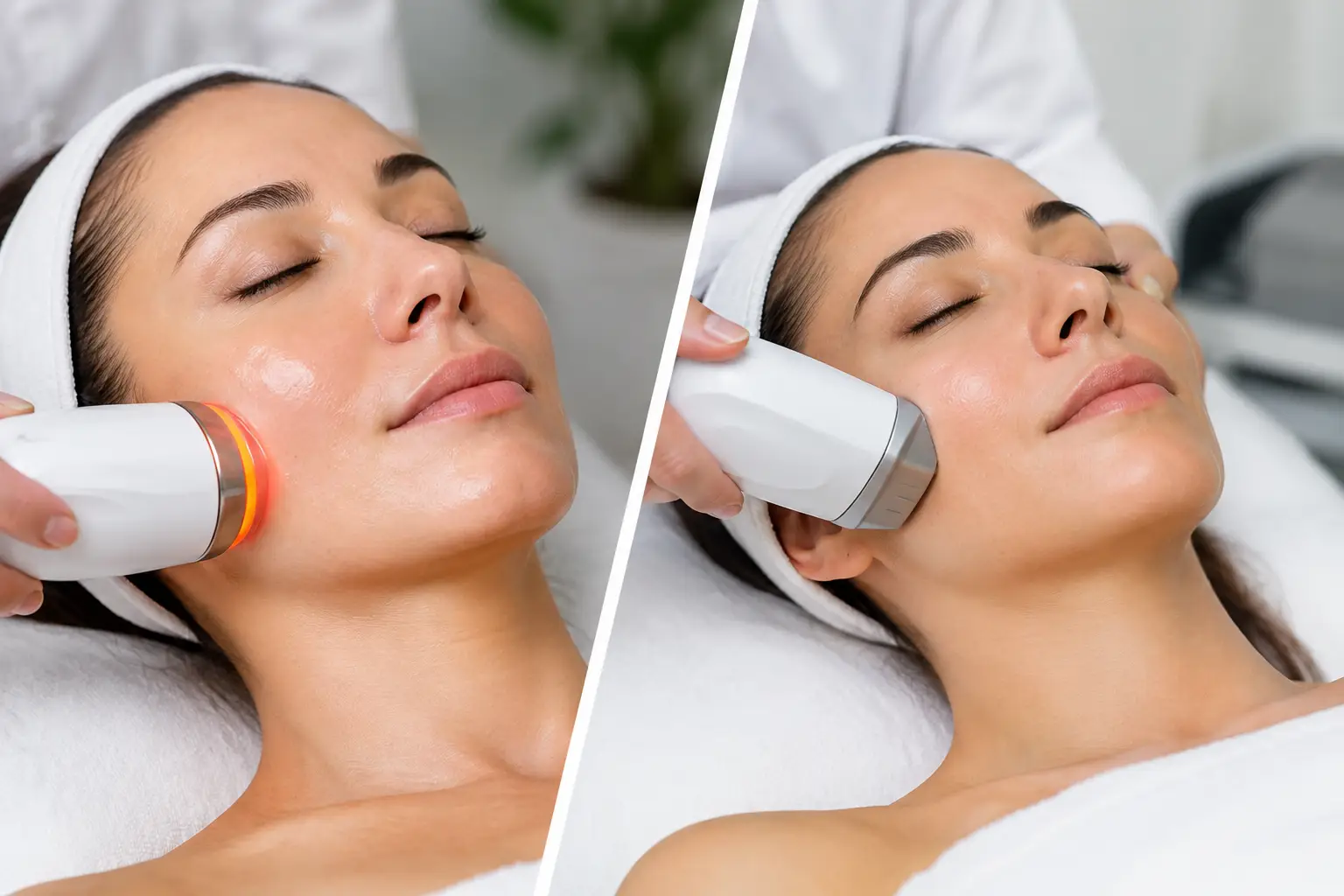
A sharper jawline, smoother lower face, or firmer neck does not always require surgery. For clients noticing early laxity, radiofrequency vs ultrasound tightening is often the key treatment decision. Both use controlled energy to encourage collagen renewal, but they work at different depths, feel different during treatment, and suit different goals.
The right choice is not simply about which technology is newer or more intense. It depends on where laxity is occurring, how much tightening you need, your comfort preferences, and whether your skin would benefit from a broader rejuvenation plan.
Radiofrequency vs Ultrasound Tightening: The Core Difference
Radiofrequency treatments use electromagnetic energy to gently heat the dermis, the collagen-rich layer beneath the skin’s surface. This controlled heat stimulates the skin’s natural repair response, supporting new collagen and elastin production over time. Depending on the device and treatment approach, radiofrequency may address facial laxity, fine lines, crepey texture, and areas of the body where skin has begun to lose firmness.
Ultrasound tightening uses focused sound-wave energy to create small, controlled thermal points at precise depths below the skin. Some ultrasound technologies can reach the deeper foundational layers that support the face, including the same general level targeted in certain surgical lifting procedures. The skin’s surface remains intact while the deeper tissue begins its gradual remodeling process.
In simple terms, radiofrequency often offers more diffuse heating through the skin, while ultrasound delivers focused energy at selected depths. Neither approach is universally better. They are different tools for different patterns of aging.
What Radiofrequency Tightening Does Best
Radiofrequency is often a compelling option when concerns involve skin quality as much as skin laxity. Clients may choose it to soften fine lines, improve the appearance of crepey skin, refine texture, and create a gradual, refreshed firmness across the face, neck, or body.
Because radiofrequency can heat a broader area of tissue, it may feel especially well suited to clients who want an overall improvement rather than a highly targeted lift. Some radiofrequency treatments are performed as a series, allowing the plan to be adjusted based on how the skin responds. This can be valuable for someone beginning preventative care or looking to maintain results from injectables, microneedling, or other rejuvenation treatments.
Comfort varies by device and treatment area. Most clients describe a deep warmth, sometimes with brief periods of increased heat. A licensed provider can adjust settings and use appropriate comfort measures while protecting treatment quality and safety.
When radiofrequency may be the better fit
Radiofrequency may be recommended for mild to moderate laxity combined with textural concerns. It can also be appropriate for clients who want gradual improvement with little interruption to a busy schedule. If the concern is not just a softening jawline but also fine lines around the mouth, thinning skin, or an overall loss of radiance, radiofrequency may provide a more comprehensive skin-quality benefit.
The exact outcome depends on the technology used, the treatment area, your baseline collagen levels, and the number of sessions recommended. A thoughtful consultation is essential, particularly for clients with sensitive skin, active inflammation, implanted electronic devices, or certain medical conditions.
What Ultrasound Tightening Does Best
Ultrasound tightening is designed for clients whose primary concern is deeper structural laxity. It is commonly considered for a softened jawline, early jowling, loose skin beneath the chin, brow descent, or mild to moderate laxity through the lower face and neck.
The focused energy can be placed at predetermined tissue depths, making ultrasound a precise option when the goal is lift rather than surface-level texture refinement. Results develop gradually because collagen remodeling takes time. Many clients begin to notice early changes within several weeks, with more visible improvement often emerging over two to six months.
Ultrasound treatments can be more intense during delivery because the energy is concentrated at depth. Sensations are typically brief and may include warmth, tingling, or quick pulses of discomfort. Your provider should discuss pain-management options before treatment and set expectations honestly. A more uncomfortable treatment is not automatically a more effective one, but proper energy delivery does matter.
When ultrasound may be the better fit
Ultrasound may be a strong choice when there is enough underlying tissue to treat and the chief priority is a subtle lift through the brow, jawline, chin, or neck. It is often appealing to clients who want a single, strategically placed treatment with results that continue to evolve over time.
However, ultrasound does not replace a surgical facelift for significant laxity, heavy jowling, or pronounced excess skin. Non-surgical tightening can create meaningful refinement, but the most beautiful results come from setting realistic expectations and choosing a treatment that respects your anatomy.
Results, Downtime, and Treatment Timing
Both radiofrequency and ultrasound tightening rely on your body’s collagen-building response. That means neither treatment offers the instant transformation of a surgical procedure or a strategically placed dermal filler. Improvements are progressive and naturally appearing, which is exactly why these treatments fit well within a long-term skin health plan.
Radiofrequency may require a series of treatments, although protocols differ substantially between technologies. Ultrasound is often performed less frequently, sometimes as a single session followed by maintenance as needed. The right schedule depends on the device, the area treated, and the degree of laxity.
Downtime is usually minimal for both options. You may experience temporary redness, tenderness, mild swelling, or sensitivity. These effects typically resolve quickly, although individual recovery varies. Avoid scheduling an energy-based treatment immediately before an important event if you have never experienced it before.
Results can last a year or longer for many patients, but skin continues to age. Sun protection, medical-grade skincare, stable nutrition, adequate protein intake, hydration, and appropriate maintenance treatments all influence how well your skin holds its improvement.
Why Skin Assessment Matters More Than the Device Name
A treatment device is only as effective as the plan behind it. Before recommending radiofrequency or ultrasound, an experienced provider should evaluate skin thickness, laxity, facial volume, bone structure, current skincare, lifestyle factors, and your desired outcome.
For example, a client who appears tired because of midface volume loss may not get the result they want from tightening alone. In that case, carefully placed dermal filler, collagen-stimulating treatment, or PRP may be more relevant. Someone with acne scarring and early laxity may benefit from a plan that combines texture-focused rejuvenation with energy-based tightening. A patient with substantial skin laxity may be better served by a surgical consultation.
This is where personalized care protects both your investment and your appearance. Chasing a single trend or device can lead to underwhelming results. A clinically informed plan considers the full picture, including internal wellness factors that support healing and lasting skin performance.
Can Radiofrequency and Ultrasound Be Combined?
In some cases, yes. Because radiofrequency and ultrasound affect tissue differently, they may be used at different times within a broader treatment plan. Ultrasound may be selected to address deeper lifting goals, while radiofrequency can support skin quality and diffuse firmness.
That said, combining treatments is not automatically necessary. More treatment is not always better treatment. Timing, energy settings, existing inflammation, prior procedures, and the condition of your skin must all be considered carefully. Your provider may recommend spacing treatments apart so the skin can recover and collagen remodeling can be assessed properly.
At The Skin Health Clinic, treatment planning begins with your concerns, not a predetermined device menu. The goal is refined, natural-looking rejuvenation that supports your confidence without making you look overtreated.
Frequently Asked Questions
Is radiofrequency or ultrasound better for sagging jowls?
Ultrasound is often considered when jowls reflect deeper lower-face laxity and a subtle lifting effect is the main goal. Radiofrequency can still be useful when laxity is mild or when texture and overall firmness are equally important. An in-person assessment determines which approach is more appropriate.
Which treatment is better for fine lines and crepey skin?
Radiofrequency is frequently favored for diffuse skin-quality concerns because it heats the dermal tissue more broadly. The best option depends on the treatment area and whether fine lines are accompanied by volume loss, sun damage, or deeper laxity.
Are these treatments safe for all skin tones?
Many modern radiofrequency and ultrasound treatments can be appropriate for a wide range of skin tones when performed by trained professionals using correct settings. Your medical history, skin condition, and any active concerns should be reviewed before treatment.
A beautiful result is rarely about choosing the strongest treatment. It is about choosing the treatment that fits your skin, your anatomy, and the way you want to age: naturally, confidently, and with lasting attention to your overall health.