
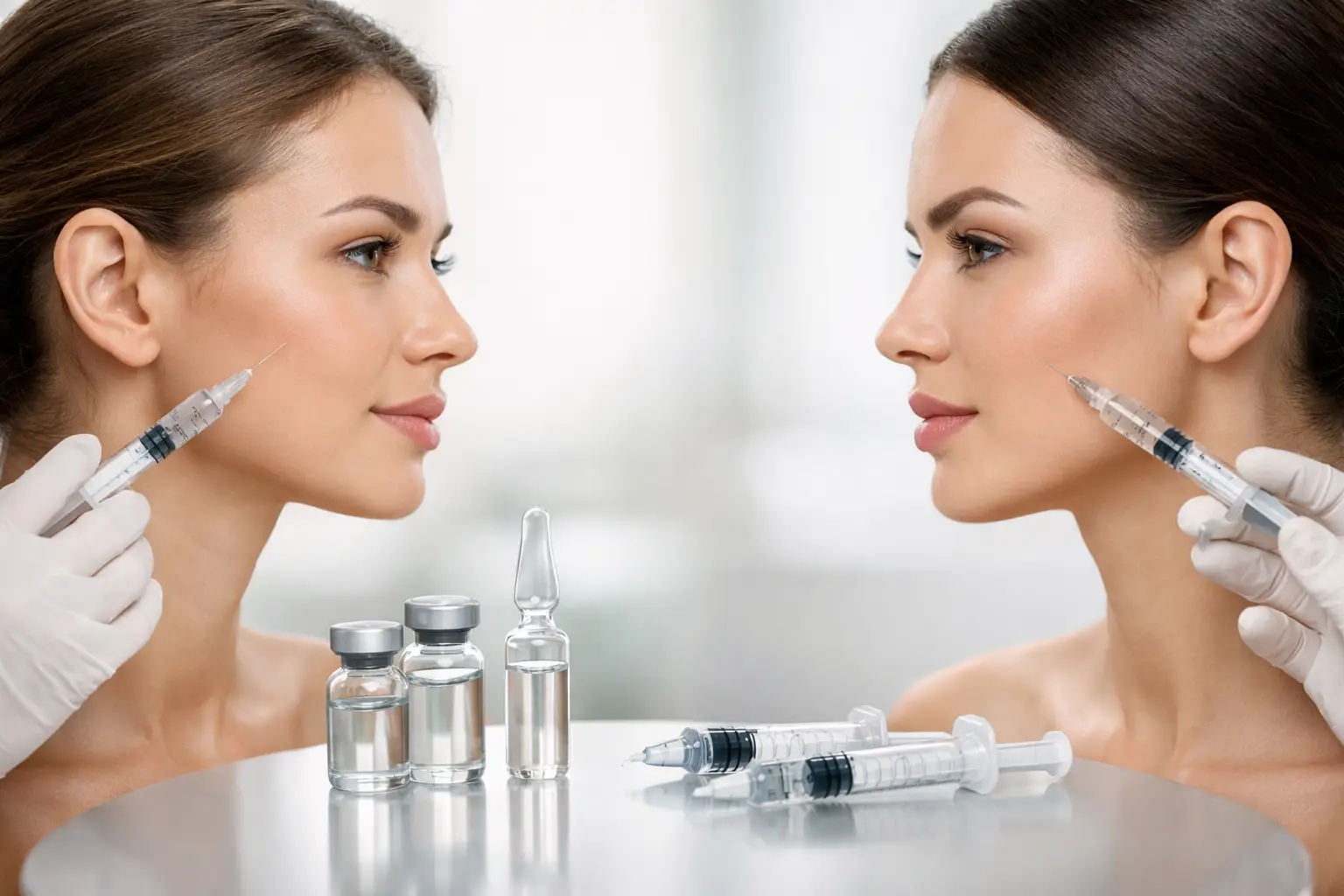
A face can look tired for more than one reason. Sometimes the change is structural: cheeks appear flatter, shadows deepen around the mouth, or the jawline loses definition. Other times, the issue is skin quality: dehydration, crepiness, dullness, and fine lines that make even well-rested skin look less vibrant. Understanding skin boosters versus fillers helps separate these concerns so your treatment plan can be as refined and individual as your goals.
Both treatments can support natural-looking rejuvenation, but they are designed to do different work. The right choice depends on what you see in the mirror, how your skin behaves over time, and the result you want to maintain.
Skin Boosters Versus Fillers: The Core Difference
Dermal fillers are primarily used to restore, enhance, or balance facial volume and contour. Many modern fillers are formulated with hyaluronic acid, a substance naturally found in the body that attracts water. When skillfully placed by a licensed professional, filler can soften deeper folds, support the cheeks, refine the lips, improve chin projection, or bring balance to the jawline.
Skin boosters are also often hyaluronic acid-based, but they are formulated and placed differently. Rather than creating noticeable structure or shape, they are delivered in a series of small injections across an area of the skin. Their purpose is to improve hydration, elasticity, luminosity, and overall skin texture from within.
Put simply, fillers reshape and support. Skin boosters hydrate and enhance skin quality. The distinction matters because using a volume-building treatment where the skin needs hydration, or vice versa, can leave a patient feeling that the result is not quite what they hoped for.
What Skin Boosters Can Improve
Skin boosters are especially appealing when the skin looks dehydrated, thin, dull, or finely lined but the face does not necessarily need more volume. They offer a subtle form of rejuvenation that respects your natural facial architecture.
Patients often consider skin boosters for the cheeks, lower face, neck, décolletage, and hands. These areas can reveal signs of aging through texture and moisture loss long before substantial volume loss is visible. A carefully selected booster treatment can help skin appear smoother, more supple, and more light-reflective over time.
The result is not typically a dramatic change in facial shape. Instead, patients may notice that makeup sits better, the complexion appears fresher, and fine dehydration lines are less apparent. This makes skin boosters an excellent option for people who want a polished, rested appearance without looking treated.
Results develop gradually and usually require an initial treatment series, followed by maintenance based on the formulation used, your skin condition, and your lifestyle. Sun exposure, smoking, stress, skincare habits, and hydration can all influence how skin performs between appointments.
Who may be a strong candidate for skin boosters?
Skin boosters may suit adults who are beginning to notice early signs of skin aging, as well as those who already receive aesthetic treatments and want to improve the quality of the skin overlying their facial structure. They can also be a thoughtful option for patients who prefer gradual improvements rather than added fullness.
They are not intended to replace filler when there is a clear need for contour restoration. If hollowing under the eyes, flattening in the midface, or pronounced folds are your main concern, a booster alone may not provide the correction you are seeking.
What Dermal Fillers Can Improve
Fillers are chosen when facial volume, proportion, or definition is the priority. Aging naturally affects the fat pads, bone structure, collagen, and connective tissues that support the face. As these changes progress, the face may appear less lifted or balanced, even if the skin itself remains relatively smooth.
A personalized filler plan can restore support in strategic areas rather than simply adding volume everywhere. For example, subtle cheek support may soften the appearance of nasolabial folds without directly filling them. Chin or jawline refinement can improve profile balance. Lip filler can restore hydration and definition while preserving a natural shape.
This is where experience and restraint are essential. Beautiful filler results should look harmonious at rest and in motion. The goal is not to create a different face. It is to preserve the character of your features while addressing changes that no longer reflect how vibrant you feel.
Depending on the product and treatment area, filler results may be visible immediately, with final settling occurring as swelling resolves. Longevity varies widely based on the formula used, placement, metabolism, and individual anatomy. A consultation with a licensed provider is the appropriate setting to discuss realistic timing and maintenance.
When filler may not be the complete answer
Filler can restore shape, but it does not directly correct every skin-quality concern. A patient may have beautifully supported cheeks and still be bothered by rough texture, enlarged pores, fine lines, or a lack of radiance. In those cases, pairing structural treatment with skin-focused therapies can create a more complete result.
This is also why adding filler repeatedly to an area that actually needs skin rejuvenation can be counterproductive. More product is not always the more sophisticated solution. Precise assessment protects both your appearance and your long-term treatment plan.
Can Skin Boosters and Fillers Be Used Together?
Yes. For many patients, the most natural-looking approach combines both treatments thoughtfully. Fillers can restore the framework of the face, while skin boosters improve the hydrated, healthy-looking finish of the skin itself.
Consider the difference between a well-tailored garment and the quality of its fabric. Facial contour provides the structure, while skin quality influences how fresh, smooth, and radiant the final result appears. Addressing both can be especially valuable for patients who want meaningful rejuvenation without an overfilled look.
A combined approach should never be automatic. Some patients need only a targeted filler treatment. Others may benefit most from a series of skin boosters, microneedling, PRP, or a medical-grade skincare protocol before any injectable treatment is considered. The most appropriate plan begins with a clear assessment, not a menu of services.
Choosing the Right Treatment for Your Goals
The best question is not, “Which treatment is better?” It is, “What is my skin and facial structure asking for?” If your concern is dullness, dehydration, fine lines, or crepey texture, skin boosters may be the more aligned option. If you see volume loss, hollowness, lack of definition, or an imbalance in facial proportions, filler may offer more meaningful improvement.
Your medical history also matters. A qualified provider should review your current medications, previous injectable treatments, allergies, skin conditions, pregnancy or breastfeeding status, and history of cold sores when treatment near the lips is being considered. Certain concerns may require a different approach or postponing treatment for safety.
Expect a thoughtful provider to discuss potential side effects as well. Temporary redness, tenderness, swelling, bruising, and small injection-site bumps can occur with either treatment. Though uncommon, more serious complications are possible with injectable procedures, particularly filler, which is why treatment should be performed by appropriately licensed, trained medical professionals who understand facial anatomy and complication management.
Support Results Beyond the Appointment
Injectables can be an elegant part of an aesthetic plan, but lasting skin health is built through consistent care. Daily broad-spectrum sunscreen, medical-grade skincare chosen for your skin type, adequate sleep, nutrition, and hydration all influence the quality of your results.
At The Skin Health Clinic, this broader view guides treatment planning. A patient may benefit from injectables alongside skin analysis, professional skincare recommendations, nutritional support, or regenerative treatments that address texture and collagen. This is not about doing more. It is about choosing treatments that work together with intention.
Will I look overdone after filler?
Not when filler is selected and placed conservatively for your anatomy. An overdone appearance is often linked to excessive volume, poor placement, or treating the same area repeatedly without reassessing the whole face. A tailored plan prioritizes proportion, movement, and natural expression.
Are skin boosters the same as Botox?
No. Botox and other neuromodulators relax targeted muscle movement to soften expression lines. Skin boosters focus on hydration and skin quality, while fillers restore volume or contour. These treatments may be used separately or as part of a personalized rejuvenation plan.
How do I know what I need?
A consultation is the clearest starting point. Your provider can assess skin hydration, texture, elasticity, facial volume, symmetry, and the concerns that matter most to you. From there, you can make a confident decision based on clinical guidance rather than trends.
The most rewarding aesthetic results rarely come from choosing the newest treatment or copying someone else’s plan. They come from an approach that honors your features, supports your skin’s long-term health, and helps you look as energized as you feel.