
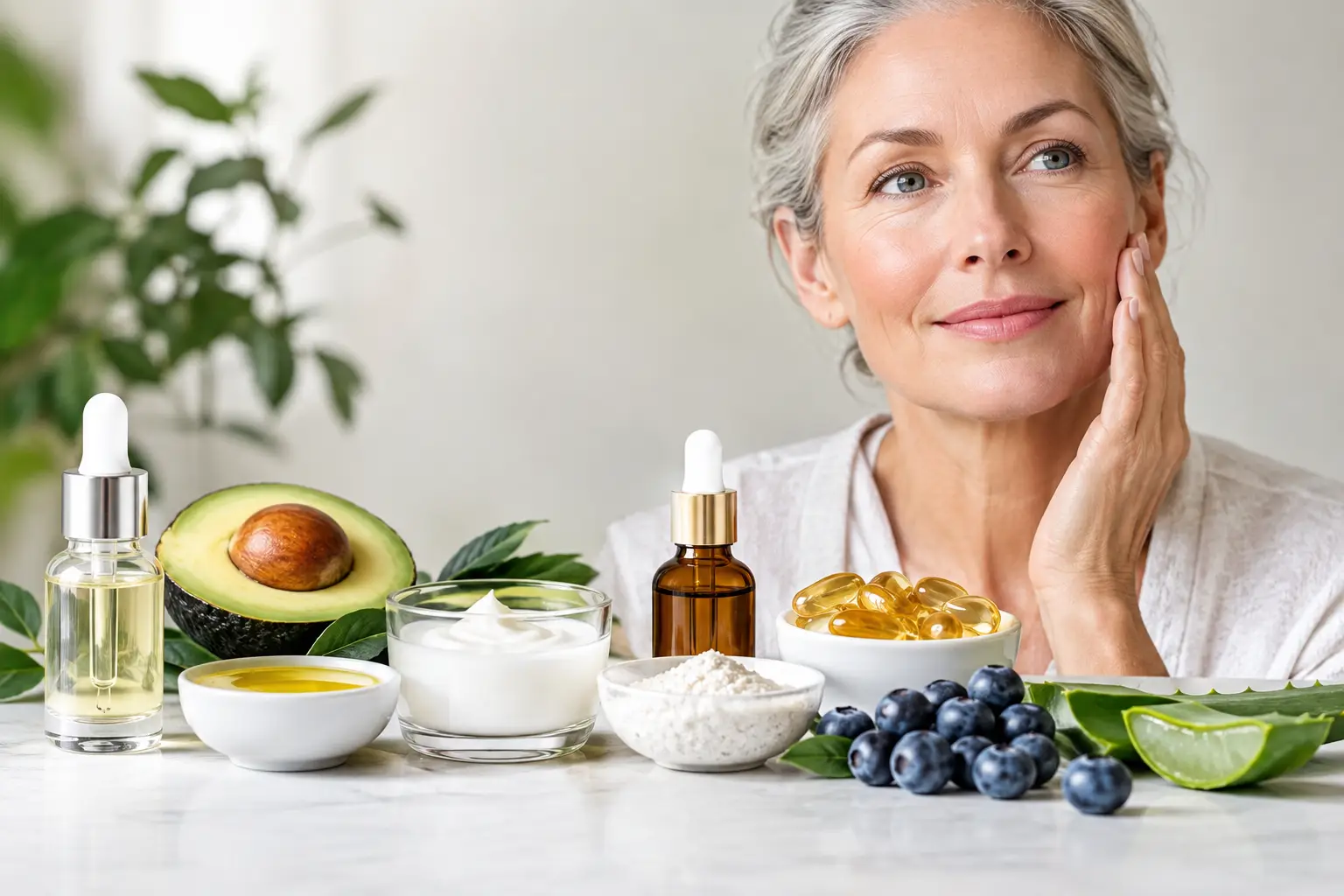
Fine lines rarely arrive alone. They often appear alongside uneven tone, a rougher texture, dehydration, loss of firmness, or skin that no longer reflects light the way it once did. The top skincare ingredients for aging work best when they are selected for your specific concerns, introduced thoughtfully, and paired with consistent professional guidance rather than layered into an overly complicated routine.
At The Skin Health Clinic, we view medical-grade skincare as an essential part of a larger rejuvenation plan. Injectable treatments, microneedling, PRP, nutrition, recovery, and daily topical care can each support healthier-looking skin. The right formula cannot replace every clinical treatment, but it can help preserve results, strengthen the skin barrier, and improve the quality of your skin over time.
Why Ingredient Selection Matters for Aging Skin
Aging is not one single skin concern. Collagen production slows, cellular turnover becomes less efficient, and years of ultraviolet exposure can contribute to fine lines, pigment irregularities, and laxity. At the same time, hormonal changes, stress, sleep, nutrition, and inflammation can influence how the skin behaves and heals.
That is why a premium anti-aging routine should not be built around the strongest product on the shelf. It should be built around what your skin can use consistently. An effective regimen supports collagen, protects against environmental damage, encourages renewal, and maintains the moisture barrier that keeps skin comfortable and resilient.
Top Skincare Ingredients for Aging and What They Do
Retinoids for collagen support and smoother texture
Retinoids, including prescription tretinoin and over-the-counter retinol or retinaldehyde, remain among the most researched ingredients for visible aging concerns. They encourage cellular turnover and can help improve the appearance of fine lines, uneven texture, enlarged pores, and discoloration. With long-term use, retinoids can also support collagen production.
The trade-off is that retinoids can cause dryness, flaking, and temporary sensitivity, especially when introduced too quickly. A lower strength used two or three nights each week is often more beneficial than a high-strength formula applied inconsistently. Those who are pregnant, breastfeeding, or trying to conceive should speak with their physician before using retinoids.
Vitamin C for brightness and environmental defense
Vitamin C is an antioxidant that helps defend skin against free-radical damage from pollution and sun exposure. It can also support a brighter, more even-looking complexion and complement daily sunscreen use. L-ascorbic acid is a well-studied form, though it may be too stimulating for highly reactive skin.
For sensitive skin, gentler vitamin C derivatives may offer a more comfortable starting point. Packaging matters as much as the ingredient itself. Vitamin C is vulnerable to light and air, so a well-formulated product in opaque, airtight packaging is worth prioritizing.
Peptides for a firmer-looking complexion
Peptides are short chains of amino acids used in skincare to support the appearance of firmness and elasticity. Different peptide technologies work in different ways, but they are often chosen for clients who want a refined, well-supported routine without the irritation that can accompany more active ingredients.
Peptides are not a substitute for the collagen-stimulating effects of procedures such as microneedling or PRP. They can, however, be an elegant addition to a maintenance regimen, particularly when skin is dry, sensitive, or recovering from more active treatments.
Niacinamide for tone, barrier function, and balance
Niacinamide, a form of vitamin B3, is a versatile ingredient for aging skin because it supports the moisture barrier while helping improve the look of uneven tone, redness, and enlarged pores. It is generally well tolerated and can be especially valuable for skin that feels dry but is also prone to congestion or sensitivity.
Higher percentages are not always better. Some people experience flushing or irritation with stronger formulas, so a moderate concentration is often the more sustainable choice. Niacinamide pairs well with many other ingredients, making it useful in a customized routine.
Exfoliating acids for radiance and refined texture
Alpha hydroxy acids, such as glycolic and lactic acid, loosen the bonds between dull surface cells to reveal smoother, more radiant-looking skin. Glycolic acid is effective for texture and tone but may be more intense, while lactic acid is often a gentler option for dry or sensitive skin. Salicylic acid, a beta hydroxy acid, can be helpful when aging concerns overlap with breakouts and clogged pores.
Exfoliation is one area where restraint matters. Combining acids, scrubs, retinoids, and strong cleansing products can leave the barrier compromised, making skin appear more inflamed and less luminous. Most clients do not need daily acid exfoliation. The right frequency depends on skin sensitivity, climate, existing treatments, and the other active ingredients in the regimen.
Hyaluronic acid and ceramides for lasting hydration
Dehydrated skin can make lines look more pronounced, even when the underlying issue is not a lack of collagen. Hyaluronic acid draws water into the skin, helping it look plumper and more supple. It performs best when applied to slightly damp skin and followed with a moisturizer that helps retain hydration.
Ceramides are naturally occurring lipids that help hold the skin barrier together. A ceramide-rich moisturizer can be particularly beneficial for mature, dry, sensitized, or post-procedure skin. These ingredients may not create dramatic overnight change, but they make it easier for the skin to tolerate targeted actives and maintain a healthy, polished appearance.
Broad-spectrum sunscreen for protecting every result
No anti-aging ingredient can outperform daily sun protection if UV exposure remains unaddressed. Broad-spectrum sunscreen helps prevent the visible effects of photoaging, including fine lines, dark spots, and loss of elasticity. It also protects the progress made through clinical treatments and corrective skincare.
Choose a sunscreen with SPF 30 or higher that feels comfortable enough to wear every day. Mineral filters can be an excellent choice for sensitive skin, while many modern chemical and hybrid formulas offer an invisible finish under makeup. The best sunscreen is the one you apply generously and reapply when you are outdoors.
How to Build an Effective Aging-Skin Routine
A refined routine does not need ten steps. In the morning, cleanse gently, apply an antioxidant such as vitamin C if appropriate, add a hydrating or barrier-supporting serum, moisturize, and finish with broad-spectrum sunscreen. In the evening, cleanse, use a retinoid or exfoliating treatment on the nights recommended for your skin, then follow with a nourishing moisturizer.
Avoid starting multiple strong actives at once. If redness, burning, persistent peeling, or breakouts develop, simplify the routine before adding more products. Skin that is calm, hydrated, and consistent in its care usually responds better than skin that is constantly being pushed to its limit.
For clients seeking more visible correction of volume loss, deeper lines, acne scarring, or laxity, a skincare regimen can be paired with customized in-clinic services. Professional skin analysis helps clarify whether topical care, Botox, fillers, microneedling, PRP, wellness support, or a combination approach is most aligned with your goals.
The most luxurious routine is not the one with the most products. It is the one that respects your skin, supports your long-term health, and gives you the confidence of knowing every step has a purpose.