
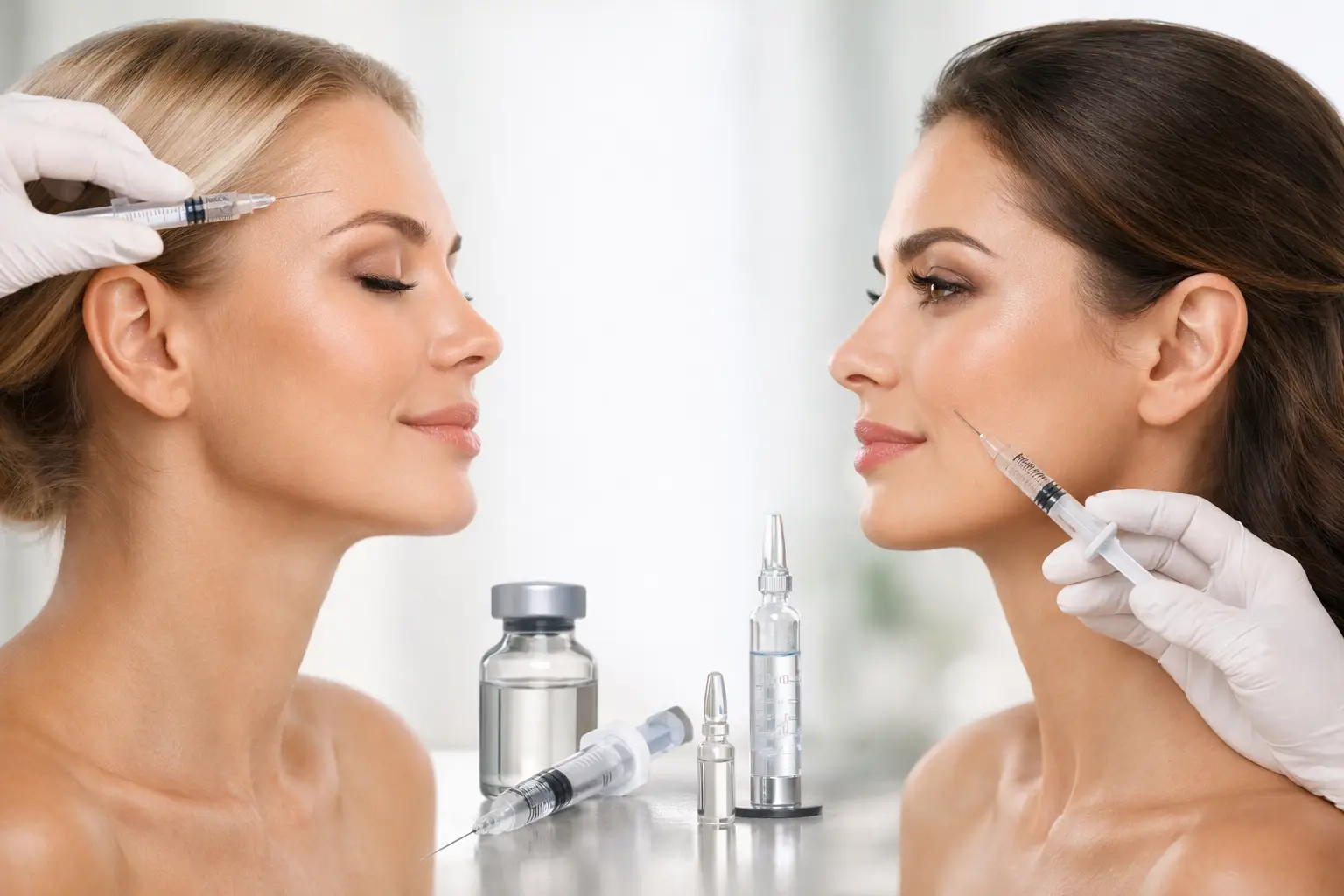
A forehead that looks tense even when you feel relaxed. Cheeks that seem flatter in photographs. Lines around the mouth that have become more noticeable than you remember. The choice between botox vs dermal fillers starts with understanding what is actually changing beneath the skin – because these treatments solve different concerns, often beautifully together.
At The Skin Health Clinic, we approach injectable treatments as part of a personalized rejuvenation plan, not a one-size-fits-all appointment. The goal is not to change who you are. It is to restore balance, softness, and confidence with results that still look like you.
Botox vs Dermal Fillers: The Core Difference
Botox is a neuromodulator. It works by temporarily relaxing selected facial muscles that repeatedly contract and crease the skin. Those expressions are part of your personality, but over time they can leave visible lines even when your face is at rest. Botox softens the muscle activity behind those lines.
Dermal fillers work differently. Most are made with hyaluronic acid, a substance naturally found in the body that attracts water and supports hydration. Fillers are placed beneath the skin to restore lost volume, refine facial contours, or soften static folds and shadows.
In simple terms, Botox addresses movement. Fillers address volume and structure. A skilled provider evaluates both because a line is not always caused by the same thing. Treating a volume-related concern with Botox alone, or a movement-related concern with filler alone, may not deliver the refined, natural-looking result you want.
What Botox Treats Best
Botox is often ideal for dynamic lines – the lines that appear or deepen as you make facial expressions. Common treatment areas include horizontal forehead lines, the vertical “11” lines between the brows, and crow’s feet around the eyes. It may also be used for a subtle brow lift, a gummy smile, chin dimpling, jaw tension, or neck bands when clinically appropriate.
The treatment itself is quick, with small, precise injections placed by a licensed professional. Most clients return to their normal activities immediately, although strenuous exercise, facial massage, and lying flat are usually best avoided for several hours according to your provider’s instructions.
Results generally begin to appear within a few days and continue developing over about two weeks. For many people, Botox results last around three to four months. Metabolism, dosage, muscle strength, and treatment history can all influence longevity.
The best Botox result is often understated. Your face should still move, smile, and communicate. The difference is that it looks more rested and less strained.
When Botox May Not Be Enough
Botox will not replace volume in cheeks, lips, temples, or under-eye hollows. It also cannot fully erase a deep fold that remains visible when the face is completely relaxed. In these situations, a provider may recommend dermal filler, skin rejuvenation treatment, or a carefully designed combination approach rather than adding more Botox.
What Dermal Fillers Treat Best
Dermal fillers are designed to restore or enhance areas where facial volume, definition, or hydration has changed. As collagen, elastin, and facial fat naturally shift with age, the face can lose some of its youthful support. This may show up as flatter cheeks, hollow temples, thinning lips, deeper smile lines, or less definition along the chin and jawline.
A thoughtful filler treatment can restore proportion without creating an overfilled appearance. Depending on the product and treatment area, fillers may be used to enhance cheek contour, refine the chin or jawline, hydrate and shape lips, soften nasolabial folds, or support marionette lines.
Many clients notice an immediate improvement, though mild swelling or bruising can occur and final results settle over the following days to weeks. Filler longevity varies significantly. Lip filler may last six to 12 months, while filler placed in the cheeks, chin, or jawline can often last a year or longer. Product selection, placement, individual metabolism, and lifestyle all matter.
Why More Filler Is Not Always Better
Natural facial rejuvenation is a matter of proportion, placement, and restraint. An experienced injector considers your facial anatomy from multiple angles, the quality of your skin, and how one area supports another. Sometimes restoring a small amount of cheek support can soften lower-face shadows more elegantly than filling every line directly.
This is where a customized treatment plan becomes especially valuable. The focus should be on harmony, not chasing an isolated concern in the mirror.
Choosing Between Botox and Dermal Fillers
The right treatment depends on what you see, what you want to improve, and how your face behaves in motion. If lines appear mainly when you raise your brows, squint, or frown, Botox may be the more appropriate starting point. If you notice a loss of fullness, deeper folds at rest, or changes in facial contour, filler may be a better fit.
Age alone is not the deciding factor. A client in their late twenties may choose preventive Botox for strong expression lines, while someone in their forties may benefit more from subtle cheek support. Some clients want a softly hydrated lip with no change to facial shape. Others want to refresh a tired-looking midface without treating lines directly.
A professional consultation brings clarity. Your provider should assess facial movement, skin quality, volume distribution, medical history, previous treatments, and your comfort level with maintenance. You should also feel comfortable asking what product is being used, why it is recommended, what results are realistic, and how the treatment can be adjusted over time.
Can You Have Botox and Fillers at the Same Appointment?
Yes. Botox and dermal fillers are frequently combined because they complement rather than compete with one another. For example, Botox may soften forehead movement while filler restores gentle cheek volume. Botox may relax a downturned mouth caused by muscle pull while filler supports surrounding folds or contours.
The right sequence and timing are individualized. In some cases, treating muscle movement first allows your provider to reassess how much filler, if any, is still needed once the face has relaxed. In other cases, completing both treatments in one visit is appropriate. The decision should be based on your anatomy, goals, and treatment plan – never a preset package.
Safety, Skill, and a Natural Outcome
Both Botox and hyaluronic acid fillers have established safety profiles when administered appropriately, but injectables are still medical treatments. Choosing a qualified, licensed provider is essential. Proper facial anatomy knowledge, conservative dosing, sterile technique, and access to appropriate emergency protocols all matter.
Your consultation should include a discussion of possible side effects. Botox can cause temporary redness, swelling, tenderness, bruising, headache, or, rarely, an unintended effect on a nearby muscle. Fillers can cause swelling, tenderness, redness, and bruising. More serious filler complications are uncommon but require immediate recognition and management, which is one reason provider expertise should never be treated as optional.
Certain medical conditions, medications, pregnancy or breastfeeding status, allergies, and past treatment experiences may affect whether or when treatment is suitable. Transparency helps your provider protect both your health and your results.
Supporting Injectable Results With Skin Health
Injectables can improve facial lines and volume, but they do not replace the fundamentals of healthy skin. Sun protection, medical-grade skincare, hydration, nutritional support, quality sleep, and strategic treatments such as microneedling or PRP can improve skin texture and radiance around your injectable results.
This broader approach matters because skin aging is not only about wrinkles or volume loss. It also involves collagen production, pigment changes, inflammation, lifestyle, and recovery. A carefully designed plan can help you maintain a polished appearance while supporting long-term skin vitality from the inside out.
The most satisfying treatment plan is rarely the one that does the most in a single visit. It is the one that respects your features, evolves with your needs, and gives you the confidence to look in the mirror and recognize yourself – refreshed, balanced, and well cared for.