
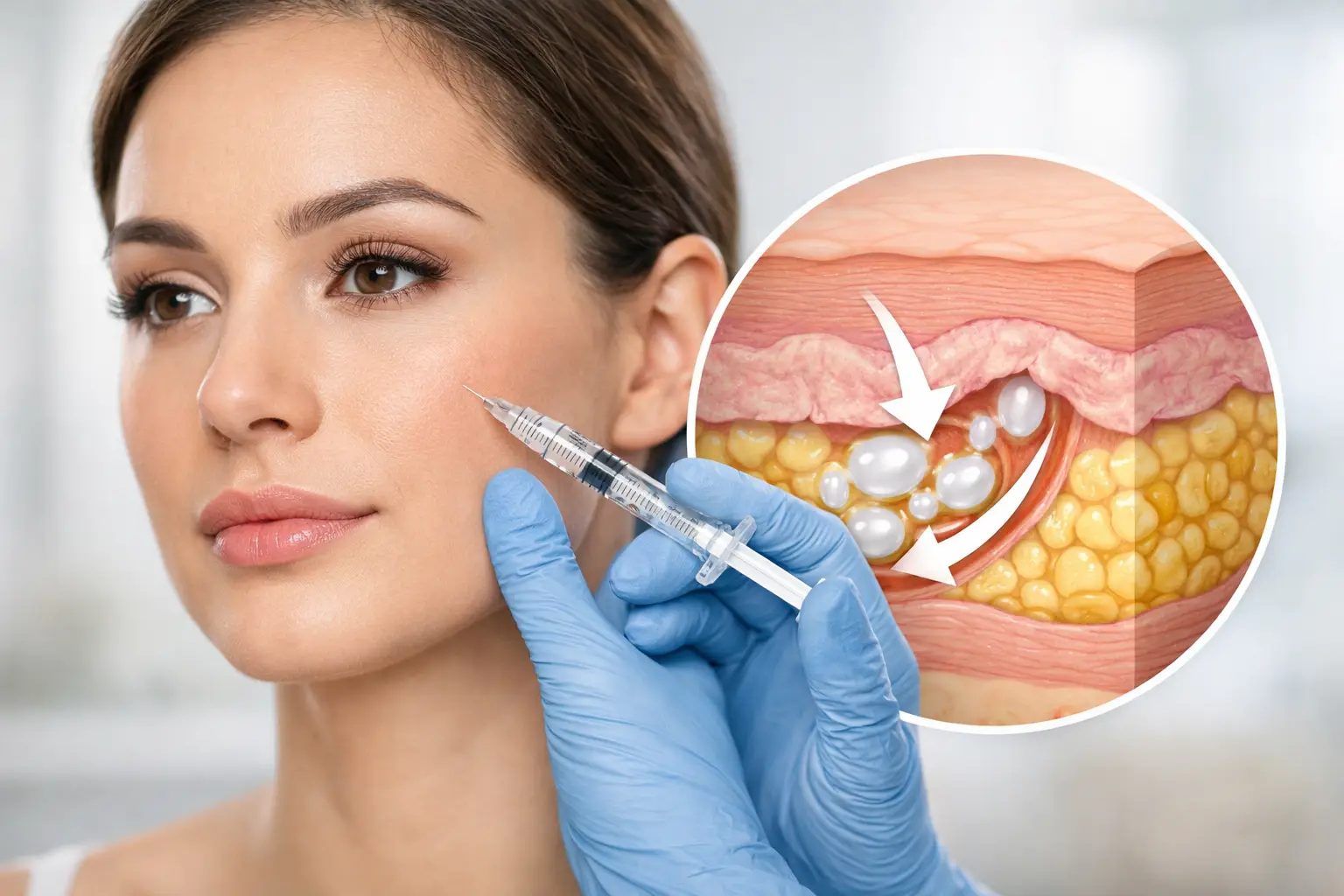
A beautifully refreshed result should look like you, not like a treatment. That is why the question, “do fillers migrate?” deserves a clear, clinically grounded answer rather than alarming social-media speculation. Dermal filler migration can occur, but it is not an inevitable outcome of treatment. With the right product, placement, dosage, and aftercare, it is often preventable.
For patients who value natural-looking rejuvenation, understanding this risk supports better decisions before treatment and greater confidence afterward. The goal is never simply to add volume. It is to restore facial balance with a personalized plan that respects your anatomy, movement, skin quality, and long-term aesthetic goals.
Do Fillers Migrate?
Yes, fillers can migrate, meaning some of the product moves beyond the area where it was originally injected. However, the term is often used too broadly. Not every change in appearance after filler is true migration. Swelling, fluid retention, bruising, a product placed too superficially, or gradual changes in the face itself can all create the impression that filler has moved.
True migration is more likely to be a concern when filler is repeatedly placed in the same area without enough time for reassessment, when too much product is used, or when the product choice and injection technique are not suited to that part of the face. It can also be more noticeable in highly mobile or delicate areas, particularly around the lips and under-eyes.
Migration does not automatically mean a treatment was unsafe or poorly performed. Facial anatomy varies, filler behavior differs by formulation, and tissue changes over time. Still, it is a reason to choose a licensed, experienced provider who takes a measured and individualized approach rather than treating every concern with more volume.
What Filler Migration Can Look Like
The appearance depends on the treatment area and the type of filler used. In the lips, migration may appear as fullness or a soft ridge above the upper lip. Patients sometimes describe a blurred lip border or a “shelf” that was not part of their intended shape. Around the under-eye area, migrated or overly superficial filler can contribute to puffiness, a bluish cast, or persistent swelling.
In the cheeks, chin, or jawline, migration may be subtler. A patient may notice that the contour looks less defined than expected or that fullness appears outside the intended structural area. These changes can develop soon after treatment, but they may also become noticeable months later as swelling resolves, the face changes naturally, or additional treatments accumulate.
A thoughtful assessment matters because the solution depends on the cause. A temporary post-treatment change may need only patience. A contour issue caused by placement or product selection may require a more targeted plan. When hyaluronic acid filler is involved, it can often be dissolved with an enzyme called hyaluronidase when clinically appropriate.
Why Does Filler Migration Happen?
Filler is not a one-size-fits-all substance. Hyaluronic acid fillers vary in thickness, flexibility, and how they integrate with tissue. A product designed to provide structure in the cheek is not necessarily the right choice for the lips or tear troughs. Matching the product to the area is a central part of achieving refined, natural results.
Injection depth is equally important. Filler placed in the incorrect plane may be more visible, feel uneven, or spread in a way that compromises definition. The face also moves constantly. Smiling, speaking, chewing, and normal facial expression place ongoing forces on the tissues, especially around the mouth.
Several factors can contribute to migration or an appearance that resembles it:
- Repeated filler treatments without evaluating what remains from prior appointments
- Excessive volume added to a small or delicate area
- An unsuitable filler formulation for the treatment site
- Inaccurate injection depth or placement
- Individual anatomy, tissue laxity, and facial movement
- Post-treatment swelling or fluid retention mistaken for filler movement
It is worth emphasizing that more filler is not always the answer to volume loss. Overfilling can blur natural contours and create a heavier appearance, even when the product has not technically migrated. Strategic treatment, sometimes combined with skin rejuvenation therapies that improve texture and collagen support, can offer a more elegant path forward.
Areas That Require Extra Precision
Every filler treatment calls for advanced anatomical knowledge, but certain areas deserve particular restraint. The lips are popular because subtle volume and definition can make a meaningful difference to facial harmony. They are also highly mobile, with limited space for product. A conservative approach, adequate healing time, and a clear plan for future maintenance help protect a soft, balanced result.
The under-eye area is another complex region. Hollowing beneath the eyes may not always be best addressed with filler. Puffiness, skin laxity, cheek volume loss, allergies, and fluid retention can all influence the appearance of this area. Treating the under-eye without considering the midface can lead to results that look swollen rather than rested.
The cheeks, chin, and jawline typically benefit from a structural approach. Here, the question is not simply where to add volume, but how to support the face in a way that maintains proportion from every angle. An experienced provider will consider your facial shape, skin quality, and existing volume before recommending treatment.
How to Reduce the Risk of Filler Migration
The most meaningful protection begins before the injection appointment. Choose a licensed medical professional with specific training and experience in facial injectables. A premium treatment experience should include a thorough consultation, medical history review, facial assessment, discussion of previous filler, and realistic conversation about what can be achieved safely.
Be transparent about any prior injectable treatments, even if they were performed years ago or at another practice. Hyaluronic acid filler can persist longer than many people expect, and a skilled provider needs the full picture before adding more product. If there is uncertainty about old filler, imaging or a staged approach may be considered depending on your needs.
Conservative dosing is not a compromise. It is often the foundation of luxury, natural-looking rejuvenation. Starting with an appropriate amount and allowing time for swelling to settle gives both patient and provider the opportunity to assess the result accurately. You can always build gradually. It is more difficult to correct an overfilled appearance.
After treatment, follow your provider’s individualized instructions. Avoid pressing or massaging the treated area unless specifically directed to do so. While normal facial movement will not cause properly placed filler to suddenly travel, unnecessary pressure and unapproved manipulation can interfere with the early healing period.
When to Contact Your Provider
Some swelling, tenderness, mild bruising, and temporary asymmetry are expected after dermal filler. These effects usually improve as the tissues settle. Contact your provider if you notice persistent or worsening swelling, new lumps, unexpected fullness outside the treatment area, or a result that looks increasingly uneven after the initial healing period.
Urgent symptoms require immediate medical attention. Severe pain, skin blanching or unusual discoloration, a mottled pattern on the skin, vision changes, or signs of infection should never be ignored. These complications are uncommon, but they underscore why fillers should be administered by qualified medical professionals in a setting equipped to assess and respond appropriately.
If you are concerned about possible migration, resist the urge to seek more filler as a quick fix. The safest next step is an in-person evaluation. Your provider can determine whether you are seeing swelling, residual product, migration, or another issue entirely, then recommend observation, correction, or dissolving when appropriate.
A More Thoughtful Approach to Facial Rejuvenation
Filler should be part of a broader aesthetic strategy, not a recurring appointment made on autopilot. Skin texture, hydration, collagen quality, nutrition, sleep, and sun exposure all affect how refreshed the face appears. For some patients, improving skin quality through clinically selected rejuvenation treatments may reduce the need for additional volume altogether.
At The Skin Health Clinic, treatment planning is designed around your individual features and lasting skin health, with an emphasis on thoughtful placement and results that remain recognizably yours. The most successful injectable results are not about chasing a trend or filling every line. They are about restoring balance with the precision, restraint, and clinical care your face deserves.