
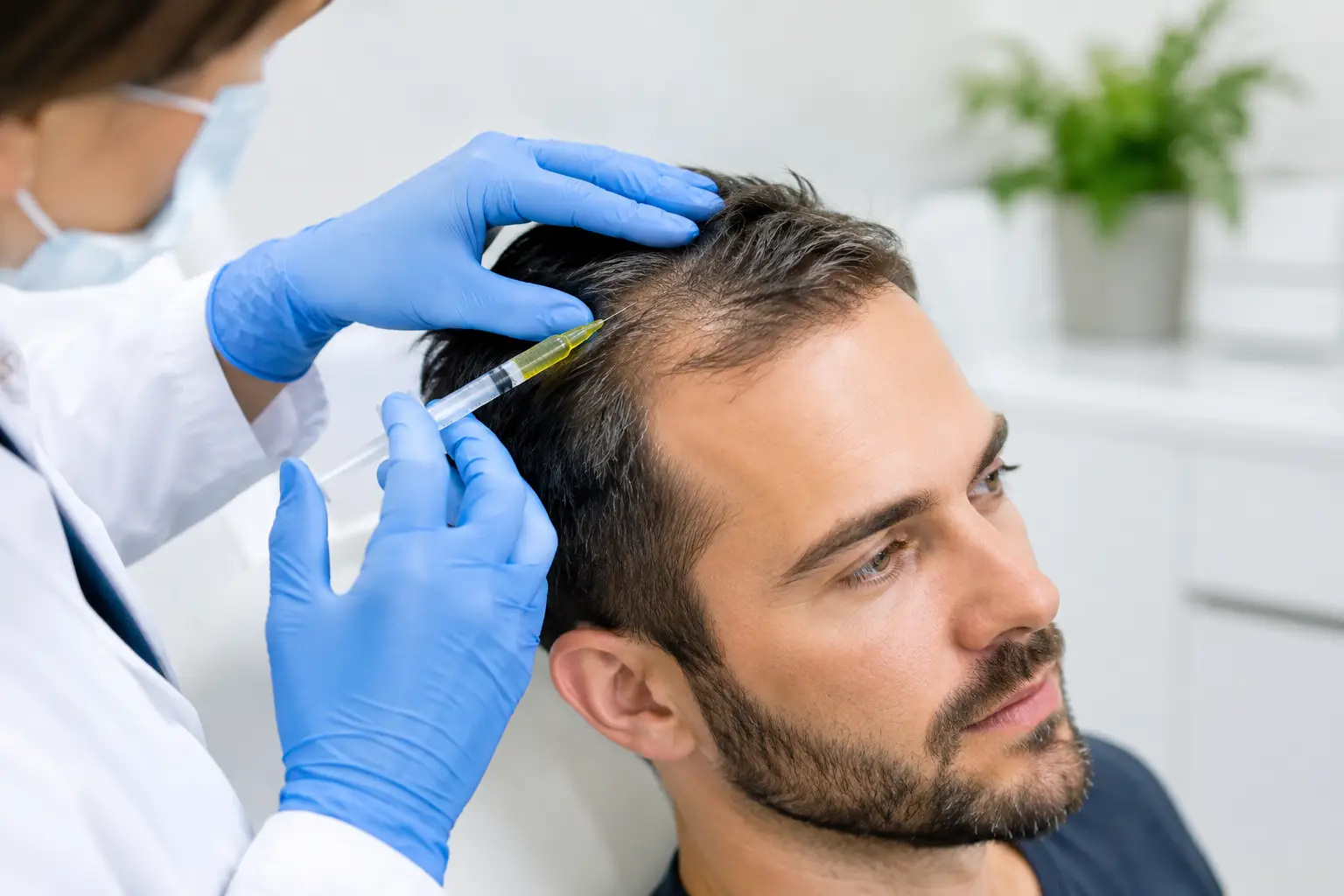
A widening part or more hair in the shower can feel deeply personal, especially when your appearance is closely tied to confidence at work, in photos, and in everyday life. Can PRP treat hair loss? For the right candidate, platelet-rich plasma therapy may help support thicker-looking, stronger-growing hair by improving the environment around existing follicles. It is not a cure for every form of hair loss, and the most refined results begin with understanding why shedding or thinning is happening in the first place.
Can PRP Treat Hair Loss Effectively?
PRP, or platelet-rich plasma, is a regenerative treatment that uses a concentrated portion of your own blood. Platelets contain growth factors that play a role in tissue repair and cellular signaling. During a hair restoration treatment, a small sample of blood is drawn, processed in a centrifuge to concentrate the platelets, and carefully injected into areas of thinning on the scalp.
The goal is not to create entirely new follicles where none remain. Instead, PRP may help awaken weakened but still viable follicles, support circulation in the scalp, and encourage a healthier hair-growth cycle. This distinction matters. Results tend to be most promising when treatment begins while follicles are miniaturized rather than permanently inactive.
Clinical research has shown encouraging results for certain patients with androgenetic alopecia, commonly known as pattern hair loss. Many people see reduced shedding, improved hair caliber, and a gradual increase in visible density. Individual response varies, however, based on the cause and progression of hair loss, overall health, hormone status, and consistency with the recommended treatment plan.
Who Is a Good Candidate for PRP Hair Restoration?
PRP can be a thoughtful option for women and men experiencing early to moderate thinning, a widening part, recession at the hairline, or reduced density at the crown. It is particularly well suited to people who want a non-surgical treatment using their own biologic material and who value natural-looking improvement over a dramatic overnight change.
A consultation should come before treatment. Hair loss can be influenced by genetics, thyroid changes, hormonal shifts, nutritional deficiencies, significant stress, rapid weight changes, illness, medications, and inflammatory scalp conditions. Diffuse shedding after a stressful event may be temporary, while progressive pattern loss may require ongoing management. These situations should not be approached in the same way.
PRP may be less effective when a scalp area has been smooth and bare for years, as this can indicate that follicles are no longer active. It may also need to be delayed or avoided for people with certain platelet disorders, active scalp infections, uncontrolled medical conditions, or blood-related concerns. A licensed medical provider can review your health history and determine whether PRP is appropriate.
Why the Cause of Hair Loss Matters
The most elegant treatment plan is never one-size-fits-all. A person with hereditary thinning may benefit from PRP alongside a medically guided hair-growth regimen. Someone shedding after restrictive dieting or low iron levels may need nutritional support and a closer look at the underlying trigger before focusing on procedures.
At The Skin Health Clinic, this broader perspective reflects an essential truth: visible hair health is often connected to internal wellness. Personalized nutrition guidance, targeted vitamin protocols when appropriate, and restorative lifestyle support can complement in-clinic treatment. They do not replace medical evaluation, but they can help create stronger conditions for sustainable results.
What Happens During a PRP Hair Loss Treatment?
A typical appointment is efficient and performed in a clinical setting. Your provider begins by discussing treatment areas, reviewing your goals, and taking baseline photographs when appropriate. A small blood draw is then processed to isolate platelet-rich plasma.
The scalp may be cleansed and numbed for comfort before the PRP is placed through a series of precise injections in areas of thinning. Treatment time can vary, but most appointments fit comfortably into a busy day. Mild tenderness, pinpoint redness, swelling, or a feeling of scalp tightness can occur afterward, usually resolving within a short period.
Because PRP is created from your own blood, the risk of an allergic reaction is low. Still, proper technique, sterile preparation, careful patient screening, and treatment by licensed professionals are central to safety. The quality of preparation and injection protocol can influence both your comfort and your outcome, which is why this is not a treatment to choose based on price alone.
When Will You See Results?
Hair grows slowly, and PRP rewards patience. Some patients notice less shedding within the first several weeks, while visible improvements in texture, thickness, and density more often emerge over three to six months. Results continue to evolve as hair moves through its natural growth cycle.
Most plans begin with a series of treatments spaced several weeks apart, followed by maintenance sessions tailored to your response and hair-loss pattern. Your provider may recommend combining PRP with other clinically appropriate approaches, such as topical therapies, oral medications prescribed by a qualified clinician, microneedling, or scalp-focused care. Combination treatment can be valuable, but it should be selected thoughtfully rather than added indiscriminately.
It is also important to set a realistic standard for success. For many patients, a meaningful outcome is slowing progression, reducing shedding, and making existing hair appear healthier and fuller. PRP may improve the quality of what you have, but it cannot promise the density you had decades ago or replace a hair transplant when advanced loss calls for a surgical solution.
PRP for Hair Loss: Benefits and Trade-Offs
The appeal of PRP is clear: it is minimally invasive, uses your own platelet-rich plasma, requires little downtime, and can fit into a long-term aesthetic and wellness plan. For image-conscious professionals, the discreet nature of treatment is often a significant advantage. There are no incisions, no linear scars, and no need to step away from life for an extended recovery.
The trade-off is that results are gradual and variable. PRP usually requires a series of appointments and ongoing maintenance, making it an investment rather than a one-time fix. It is also commonly considered an off-label use in the United States. While PRP has been used across regenerative medicine and research supporting its use for pattern hair loss is growing, no treatment should be presented as guaranteed.
The most trustworthy approach is transparent: PRP can be an excellent tool for suitable candidates, but it works best as part of a personalized plan built around diagnosis, scalp health, and long-term follow-through.
Questions to Ask Before Starting PRP
Before committing to treatment, ask what type of hair loss you may have, whether your follicles appear viable, how many initial sessions are recommended, and how results will be measured. Clear baseline photos, periodic assessment, and an honest discussion of maintenance help turn expectations into a plan.
You should also share every medication, supplement, and recent health change with your provider. Certain medications and anti-inflammatory products may affect treatment guidance, and unexplained or sudden shedding can warrant evaluation by a primary care clinician or dermatologist. Premium care means knowing when to treat and when to investigate further.
Is PRP painful?
Most patients describe the sensation as manageable, particularly when numbing options are used. The scalp can be sensitive, but the treatment is brief, and your provider can adjust the experience with comfort in mind.
Can PRP be combined with other treatments?
Yes, often. PRP may complement other hair-restoration strategies, but the right combination depends on your diagnosis, medical history, and goals. A customized plan avoids unnecessary treatments while supporting the best possible response.
How long do PRP results last?
Maintenance is typically needed because hereditary and hormonal hair loss can continue over time. The frequency depends on how your scalp responds and whether other therapies are part of your regimen.
Hair restoration is rarely about a single appointment. It is about giving active follicles the right clinical support, respecting the biology behind hair growth, and choosing a plan that helps you feel more like yourself with every stage of progress.