
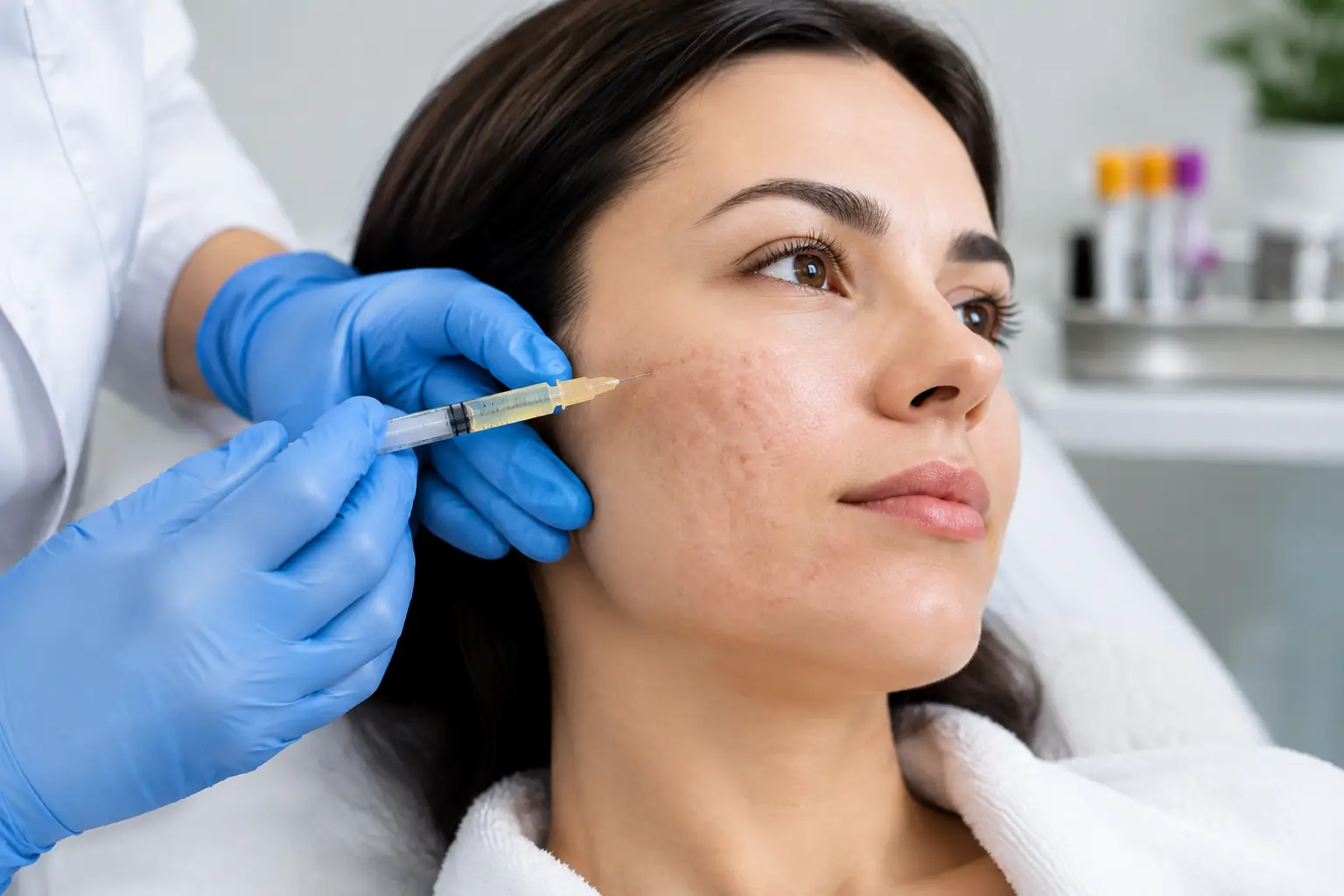
Acne may have cleared years ago, yet the uneven texture it leaves behind can still affect how you feel when you see your reflection or step into bright light. So, does PRP help acne scars? For the right candidate, platelet-rich plasma can be a valuable part of a customized scar-rejuvenation plan, particularly when paired with microneedling. It is not a one-treatment eraser, and it will not improve every scar type equally. But it can support healthier collagen renewal and help the skin look smoother, firmer, and more refined over time.
At The Skin Health Clinic, we approach acne scarring as a skin-health concern, not simply a surface-level cosmetic issue. Your scar pattern, current breakouts, pigmentation, skin sensitivity, lifestyle, and long-term goals all deserve consideration before treatment begins.
Does PRP Help Acne Scars by Building Collagen?
PRP stands for platelet-rich plasma. It is created from a small sample of your own blood, which is placed in a centrifuge to concentrate platelets and plasma. Platelets contain growth factors that play a role in the body’s natural repair process. When PRP is applied during microneedling or strategically injected in certain cases, it may help support collagen production and tissue remodeling.
This matters because many acne scars form when inflammation disrupts the skin’s collagen structure. Instead of healing evenly, the skin heals with depressions, tethering, or irregular texture. Treatments that encourage controlled collagen renewal can soften the contrast between scarred and surrounding skin.
Research on PRP for acne scars is promising, especially when PRP is combined with microneedling. Several studies suggest the combination can improve scar appearance more effectively than microneedling alone for some patients. Still, outcomes vary, and the evidence is not a guarantee of a dramatic change for every person. PRP works best as an enhancement to a well-chosen treatment protocol rather than a universal answer to all acne scarring.
Which Acne Scars Respond Best to PRP?
PRP with microneedling is often most helpful for mild to moderate atrophic scars. These are indented scars caused by a loss of collagen after acne inflammation has settled. Rolling scars and some shallow boxcar scars may respond particularly well because they can improve as collagen support develops beneath the surface.
Deep, narrow ice-pick scars tend to need a different approach, such as targeted scar reconstruction techniques. Very sharply defined boxcar scars may benefit from resurfacing, scar release, or another procedure before PRP is considered. Raised scars are also managed differently, since they involve excess collagen rather than collagen loss.
Pigment left after acne is not technically a scar, although it can make texture look more pronounced. PRP may support overall skin quality, but discoloration often requires additional strategies such as medical-grade skincare, sun protection, pigment-focused treatments, and careful control of active inflammation.
This is why a professional skin assessment is essential. Treating all acne marks the same way can lead to disappointing results, unnecessary expense, or irritation without meaningful improvement.
Why Microneedling and PRP Are Often Paired
Microneedling creates controlled microchannels in the skin. This initiates a repair response that encourages new collagen and elastin formation. When PRP is applied immediately afterward, those microchannels can help deliver the platelet-rich plasma across the treatment area while the skin’s recovery process is active.
The pairing offers a refined balance for many patients: microneedling provides the controlled stimulus, while PRP contributes your body’s own concentrated growth factors. Because PRP comes from your blood, it is generally well tolerated. It also appeals to patients seeking a more natural-looking approach to rejuvenation rather than a treatment that changes facial features.
For some scar patterns, a provider may recommend PRP injections in addition to topical application. Injections are not necessary for everyone. The decision depends on the depth and location of scars, your tolerance for downtime, and whether other treatments would offer a better return on your investment.
What a PRP Acne Scar Appointment Feels Like
A typical visit begins with a blood draw. While the sample is processed, the skin is cleansed and prepared. A topical numbing cream is usually applied before microneedling to maximize comfort. The treatment itself generally takes less than an hour after numbing, although appointment times vary.
Afterward, redness and warmth are common, similar to a moderate sunburn. Pinpoint bleeding, mild swelling, and temporary sensitivity can occur. Most patients feel comfortable returning to normal activities within a day or two, though visible redness may last longer depending on skin sensitivity and treatment intensity.
For the first 24 hours, your provider may ask you to avoid makeup, strenuous exercise, heat exposure, and products that can irritate the skin. A gentle, provider-approved recovery routine and daily broad-spectrum sunscreen are essential. Sun protection is especially important for patients prone to post-inflammatory hyperpigmentation.
How Many Treatments Will You Need?
Acne scar improvement is gradual because collagen remodeling takes time. Many patients begin with a series of three treatments spaced roughly four to six weeks apart, then reassess their progress. More established scars may require additional sessions or a combination plan.
You may notice a healthy glow or smoother feel relatively soon after treatment, but the more meaningful texture changes usually develop over several months. This slower progression is not a drawback. It reflects the skin’s natural rebuilding process, which can create improvements that look believable and harmonious rather than abruptly altered.
A high-quality treatment plan also recognizes when PRP is not enough on its own. Scar release may be appropriate for tethered rolling scars. Chemical reconstruction may be more effective for ice-pick scars. Energy-based resurfacing can be useful for selected patients, while a customized home regimen helps protect and extend professional results.
Who Should Wait Before Having PRP for Acne Scars?
PRP is generally considered when acne is controlled, not during an active flare with inflamed lesions across the treatment area. Treating active acne first helps reduce the risk of spreading irritation and gives your skin a stronger foundation for scar correction.
A medical consultation is also important if you are pregnant or nursing, have a bleeding disorder, take blood-thinning medications, have an active skin infection, or have a health condition that affects healing. Certain medications, including recent oral isotretinoin use, may change the timing or type of treatment recommended.
Your overall wellness matters, too. Hydration, protein intake, nutritional status, stress, sleep, and smoking can all influence how skin heals. PRP is made from your own blood, so supporting your body’s health before and after treatment is a meaningful part of the process. This is where an integrated plan can go beyond a single procedure and better support lasting skin performance.
Setting Realistic Expectations for PRP Scar Treatment
The most satisfying PRP results tend to be refined rather than theatrical. Patients often see texture that looks softer, pores that appear less noticeable, and skin that reflects light more evenly. The goal is not perfection. It is skin that looks healthier, more even, and more confident without looking treated.
Before beginning, ask to discuss your specific scar types, anticipated number of sessions, recovery plan, and whether combining treatments is likely to produce a better result. A licensed provider should be candid about what PRP can improve and where another modality may be more appropriate.
Your acne scars tell the story of skin that has already been through a great deal. With thoughtful treatment, patient pacing, and expert guidance, that story can become one of renewal rather than something you feel compelled to hide.